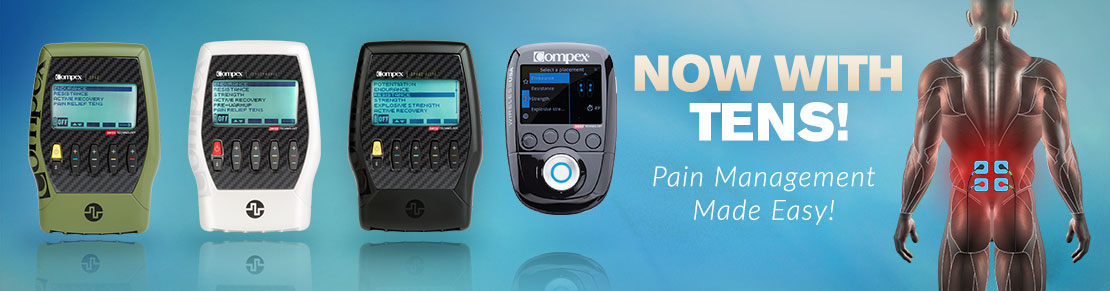
Transcutaneous Electrical Nerve Stimulation (TENS) is the use of electrical pulses to stimulate the sensory nerves of the body and help provide pain relief. Part of a pain management program, TENS can be found in physical therapy offices, athletic training rooms, and portable devices used at home.
Benefits of TENS*
Temporary Relief of Pain
Increased Circulation and Healing
Symptomatic Relief and Management of chronic pain
Relief of pain associated with Arthritis
*Data on file
HOW IS TENS DIFFERENT FROM EMS?
TENS is designed to target sensory nerves. Typically, sensory nerves receive a signal
that they relay to the brain, the brain then decides if the stimulus is painful, soft, warm,
etc. When using a TENS program the goal is to alleviate pain by either inducing an
endorphin release (Low Frequency TENS programs) or to block the pain signals to the
brain through the Gate Theory (High Frequency TENS programs).
EMS (Electrical muscle stimulation) is often confused with TENS (Transcutaneous
Electrical Nerve Stimulation), a common modality used in physical therapy offices.
Compex EMS provides an electrical current at a specifically designed frequency to
target motor nerves. These nerves activate the muscle to contract based on the
amount of resistance applied through the device. The brain goes through a similar
process when actual weights are lifted.