Common areas of knee soreness are behind the knee or in the front of the knee, just under the kneecap. Sore knee caps are also sometimes reported due to patellar tendonitis. In some cases the entire knee may be sore or it may be difficult to pinpoint the exact area of knee pain.
Because the knee is a complex joint, there are many different conditions that may cause knee soreness. Sore knees may be caused by simple overuse or it can be a sign of a serious problem, such as a torn ligament. If you are experiencing knee soreness, your doctor may look for these common causes of sore knees:
- Overuse injury, such as iliotibial band syndrome or tendonitis
- Arthritis, such as rheumatoid arthritis or osteoarthritis
- Direct trauma, such as torn cartilage (torn meniscus) or a torn ligament
- Knee sprain or knee strain, usually caused by moving the knee unnaturally
- Knee bursitis, an inflammation of the cushioning sacs around the knee joint
In order to determine the appropriate form of treatment for knee pain, your doctor will first need to diagnose the cause of your knee soreness. When you see your doctor, be sure to describe any recent injury and be sure he or she is aware of your medical history. Tell your doctor if there is soreness behind the knee, a sore knee cap, or if the pain is all around.
In addition to reviewing your medical history and recent activity, your doctor may request an imaging test such as an X-ray or MRI to be performed. This will determine if the knee soreness is caused by a ligament or cartilage tear or from a bone injury.
There are many forms of treatment for sore knees and the types of treatment vary depending on the cause of knee soreness. Consult with your doctor for the appropriate treatment for your sore knees. Here's what types of sore knees treatments that are common...
If the sore knee has just begun due to overuse or a physical injury, then most physicians will recommend the RICE method:
- Rest - Important so you can avoid any physical activity that may exacerbate the issue.
- Ice - Applying cold to the area may help numb away pain from sore knees and reduce any swelling.
- Compression - Wrap a bandage or wear a knee sleeve.
- Elevation - Keep the leg raised on a pillow or chair when seated/lying down.
Your doctor may also recommend over-the-counter anti-inflammatory medications such as ibuprofen or aspirin. In some cases, heat can help soothe the sore areas of the knee as well. Knee soreness caused by bursitis may also have similar treatments to above (RICE and OTC medications)
In cases where a doctor has discovered a more serious injury, then other types of treatment such as surgery may be needed.
If the knee soreness is due to arthritis:
- Rest may be initially recommended, then possibly some light exercise or physical therapy to strengthen the areas around the knee.
- Wearing an arthritis knee brace may help shift weight from the affected areas of the knee to healthier areas of the joint to reduce soreness.
- Weight loss may also help minimize strain on the joint, thus decreasing knee soreness
If your sore knee comes and goes, it may indicate a chronic knee issue. This is common, especially in athletes. Your doctor may suggest that you limit activities that place excessive strain on the knee joint. Swimming is often recommended as a physical activity that minimizes the types of stress that cause knee soreness. Wearing a knee brace during physical activity may also help minimize the strain on the joint, thus decreasing sore knee issues. Many people report that wearing knee braces have reduced knee soreness and knee pain. Though the results vary from situation to situation, it may be an option for your form of treatment.
Be sure to consult your physician before pursuing any type of treatment for sore knees.
Best Selling Knee Braces
-
View Details
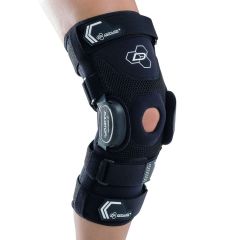
$219.99
On Sale
0%
Off
Save
$0.00
Maximum+ support for ACL, meniscus, and knee ligaments. Dual Fullstop dampening hinges and 4-strap design protect the knee and prevent hyperextension. Bilateral polycentric hinges keep knee from at-risk positions while breathable mesh and ergonomic design ensure comfort and a secure fit. Ideal for athletes and active adults.
Recommended for:
- ACL Injury
- Meniscus Injury
- MCL and LCL Protection
- Chronic Knee Instability
- Hyperextension
- Moderate Tendon Strain
- Moderate Ligament Injury
-
View Details
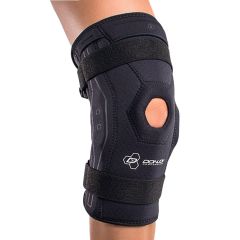
Special Price
$77.99
Regular Price
$86.99
On Sale
10%
Off
Save
$9.00
Maximum support for MCL, LCL, and meniscus injuries with padded bilateral hinges and open patella buttress for added knee stability. Bilateral polycentric hinges stabilize against lateral forces and prevent hyperextension. Breathable 4 mm neoprene and ergonomic wraparound design provide comfort with a secure fit for athletes and active adults.
Recommended for:
- MCL and LCL Instabilities
- Knee Hyperextension
- General Meniscus Support
-
View Details
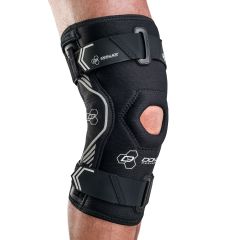
Special Price
$86.99
Regular Price
$95.99
On Sale
9%
Off
Save
$9.00
Moderate support with polycentric hinges for ligament stability and a natural gait. Mesh popliteal and open patella design with donut enhance comfort and targeted kneecap support. Moisture-wicking Drytex material and adjustable straps provide an ideal customized and comfortable fit. Ideal for athletes and active adults.
Recommended for:
- Mild to Moderate MCL/LCL Injuries
- Meniscus Injuries
- Knee Instability
- Sprains and Strains
- Hyperextension
- Arthritis
-
View Details
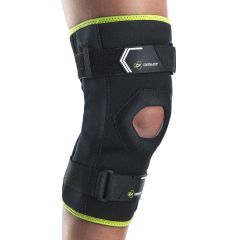
Special Price
$61.99
Regular Price
$68.99
On Sale
10%
Off
Save
$7.00
Maximum lateral support with dual polycentric hinges for stability and improved patella tracking. Low-profile wraparound style brace with neoprene and terrycloth lining deliver breathable comfort for all-day wear. Open hex buttress provides gentle compression and kneecap stability, making this brace ideal for athletes and active adults.
Recommended for:
- Meniscus Injury
- MCL and LCL Protection
- Knee Instability
- Hyperextension
- Strained Muscles or Tendons
- Sprained Ligaments
-
View Details
Special Price
$69.99
Regular Price
$77.99
On Sale
10%
Off
Save
$8.00
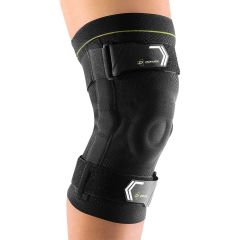
Moderate support with closed silicone buttress and removable hinges for patella support and stability. 4-way stretch knit fabric and dual adjustable straps ensure ideal fit. Customizable compression helps manage swelling and supports improved circulation. Ideal for athletes and active adults.
Recommended for:
- Overuse Injuries
- Mild Sprains
- Mild Strains
- Inflammation/Swelling
-
View Details
Special Price
$29.99
Regular Price
$33.99
On Sale
12%
Off
Save
$4.00
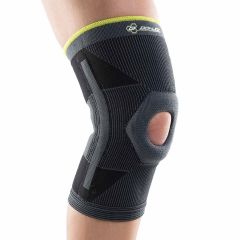
Moderate support from zoned compression and lateral stabilizers. Open-patella silicone hex buttress delivers patellar stabilization, while 4-way stretch knit provides compression with comfort. Flexible stays offer medial/lateral support without restricting movement, and anti-migration details keep the sleeve secure for athletes and active adults.
Recommended for:
- Patellofemoral Syndrome
- Mild Sprains and Strains
- Knee Instabilities
- Inflammation/Swelling
- Soreness
- Arthritis
- Bursitis
- Overuse Injuries
-
View Details

Special Price
$48.99
Regular Price
$53.99
On Sale
9%
Off
Save
$5.00
Stabilize Your Stride
Dual-pull straps and removable buttresses deliver customizable patellar support for peak performance.
Lightweight 4-way stretch knit ensures comfort and flexibility during every workout.
The Dual-Pull Patella Stabilizer Knee Sleeve can be used to treat or prevent the following knee injuries:
- Runner's Knee
- Patellofemoral Syndrome (PFPS)
- Patella Maltracking
-
View Details
Special Price
$46.99
Regular Price
$51.99
On Sale
10%
Off
Save
$5.00
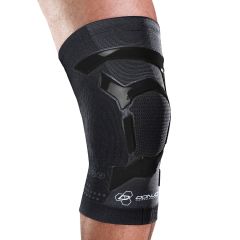
Mild to moderate support from a powerful combination of compression and bracing technology. Three zones of silicone banding enhance joint stability and comfort. Carbonized bamboo knit fibers regulate heat and minimize odor, while anti-migration technology keeps the sleeve secure for athletes and active adults.
Recommended for:
- Strains
- Soreness
- Repetitive Motion Injuries
- Proprioception
- Inflammation/Swelling
- Degenerative Meniscus
- Tendonitis
- Mild Joint Instability
- Compression