





Iliotibial Band Syndrome (ITBS)
Iliotibial Band Syndrome (ITBS) is a leading cause of outer knee pain in runners, cyclists, and active individuals. This overuse injury affects the iliotibial band, a tendon that stabilizes the knee, and can worsen without proper care. Fortunately, ITBS is treatable without surgery. Learn how targeted therapies like stretching, foam rolling, and shockwave treatment can help relieve pain, restore mobility, and support a full recovery.
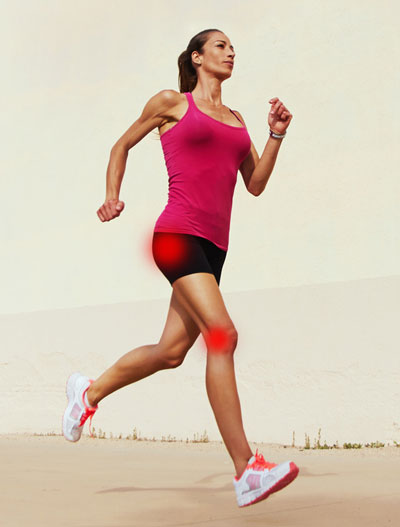
Overview
What Is Iliotibial Band Syndrome?
Iliotibial Band Syndrome (ITBS) is a common injury that causes pain on the outside of the knee. It often affects runners, cyclists, and people who do a lot of bending and straightening of the knee. The iliotibial band (IT band) is a tendon on the outside of your leg, that goes from the top of your pelvic bone down to your knee. It helps keep your knee steady when you move.
What Causes ITBS?
ITBS is an overuse injury of the ITBS, causing pain on the outside of the knee. Researchers are still debating the exact cause of iliotibial band syndrome.1 Doctors previously thought ITBS was caused by the IT band rubbing over the outside of the knee. But now, experts believe the pain comes from the band pressing down on the tissue underneath it, especially when your knee is bent about 30 degrees, like during running or biking.
Who is at risk for Iliotibial Band Syndrome?
Iliotibial band syndrome happens most commonly in distance runners, but also from other sports, like cycling, skiing, rowing, or soccer.3 Some people are more likely to get ITBS because of how their body moves. These are called biomechanical risk factors. A study in BMC Musculoskeletal Disorders10 found that runners with ITBS often have:
- Hips that drop more on one side when they run
- Knees that twist inward too much
- Weak hip muscles (like the glutes)
- Legs that are slightly different lengths
- Feet that roll inward too much (called overpronation)
These movement patterns can put extra stress on the IT band and cause pain over time.
What increases the risk of ITBS?
If you are an athlete in training, you may be more likely to develop iliotibial band syndrome if:
- Training surface: Running on uneven or inclined surfaces, such as consistently running in the same direction on a track or engaging in downhill runs, can place repetitive stress on the IT band.
- Training schedule: Abruptly increasing training volume or intensity can contribute to heightened stress on the body and lead to improper movement patterns.
- Shoe wear: Runners are advised to replace their shoes after approximately 300 to 500 miles. Using worn-out shoes can negatively impact the mechanics of the foot, ankle, knees, hips, and pelvis.
How Do Doctors Know It is ITBS?
Pain on the outside of the knee can come from different problems, not just ITBS. That is why doctors perform specific tests to determine the cause. Here’s how ITBS compares to other common knee issues:
| CONDITION | WHAT MAKES IT DIFFERENT |
|---|---|
| ITBS | Sharp pain on the outside of the knee, especially during running or biking |
| Lateral Meniscus Tear | Clicking, locking, or swelling inside the knee |
| Patellofemoral Pain | Aching pain around or behind the kneecap, which gets worse with stairs or sitting |
| Lateral Collateral Ligament (LCL) Injury | Pain and feeling of instability on the outer side of the knee after a twist, fall, or contact against the inside of the knee pushing outward. |
Treatment for IT Band Syndrome
The primary treatment for ITBS is to rest from the activity that is causing the injury. Consult a qualified healthcare professional to identify the causes of your IT band syndrome, assess risk factors, and recommend exercises.2
ITBS Therapy Recommendations
Stretching and foam rolling are key parts of managing and recovering from Iliotibial Band Syndrome. Whether you're preparing for activity or winding down afterward, using the right techniques can make a big difference.
Stretching vs. Foam Rolling for ITBS
Stretching is used to lengthen muscle fibers and connective tissue to increase range of motion and flexibility while also reducing risk of future injury. It can be used as a warmup prior to activity or as a cool after following exercise. The two most common forms of stretching techniques are static stretching and dynamic stretching:
- Dynamic stretching involves controlled movements through a full range of motion. Dynamic stretches should be used as part of your warm-up routine before any athletic event, whether competitive or not. Dynamic stretching should be performed prior to exercise with a total of less than 90 seconds per upper leg muscle group.9
- Static stretching involves holding a stretched position for a period without any bouncing or dynamic movement. Static stretching is often incorporated into cool-down routines after workouts. It can help reduce muscle soreness and stiffness by promoting blood flow and relaxing muscles.
Myofascial rolling, or foam rolling, is a common tool and technique used to treat ITBS and other soft tissue injuries. The purpose of foam rolling is to “break up” adhesions, commonly referred to as “knots,” within the connective tissue surrounding the muscle. Like stretching, foam rolling can be used as a part of your warmup routine or during cool down or recovery period.
- For beginners, foam rolling should be used for a total of 5-10 minutes several days per week. This can be done either before and/or after an activity. Spend about 1-2 minutes on every major muscle group in the lower body (quadriceps, hamstrings, gluteals, calves).8
- For advanced users, perform a self-myofascial release (SMR) by actively moving your affected limb while maintaining pressure on the targeted muscle to release tension (I.e., bending and straightening your knee while rolling your quadriceps muscle).
There are a variety of foam rollers which vary in size, density, and texture as well as handheld rollers. Some patients may prefer soft and smooth foam rollers while others may prefer textured and denser foam rollers. A softer foam roller may be more comfortable but might not provide enough pressure to the muscle, whereas a denser foam roller may provide too much pressure for some patients. The best foam roller for you is the one that you will use frequently without hesitation.
What common mistakes should patients avoid?
Both stretching and foam rolling should be performed slowly while maintaining control of your body. Focusing on a particular area or muscle group for too long may result in additional injury. Be sure not to overstretch or apply too much pressure to a sensitive area. While it is common to experience mild discomfort with stretching or foam rolling, you should not experience any pain.
Shockwave Therapy
Extracorporeal Shockwave Therapy (ESWT) or shockwave therapy is a non-invasive treatment that uses high-energy acoustic waves to target damaged tissue and promote healing. Its use in treating musculoskeletal injuries has become more prevalent over the years and is used today for several medical conditions.
Common Injuries Treated with Shockwave Therapy:
- Tendinopathy (patellar tendinitis, Achillies tendinitis)
- IT Band Syndrome (ITBS)
- Plantar Fasciitis
- Golfers Elbow/Tennis Elbow
- Bursitis
- Muscular Strains (quadriceps, hamstring)
Studies have shown that ESWT can assist in pain relief, tissue regeneration, and the reduction of calcium deposits on tissue.5 ESWT can be used for both acute and chronic injuries but is typically used as a non-operative treatment for chronic musculoskeletal injuries after other conservative treatments have failed.
Shockwave therapy is performed by a healthcare professional and should not be used on injuries or conditions such as blood clots, tumors, open growth plates, cancer, or pregnancy. Consult with your healthcare provider to see if this is a treatment option for you.
Return-to-Activity Guidelines
Following an injury, a person must be able to complete certain steps or tasks before returning to their normal sport or activity level. A general outline for rehabilitating and returning to activity following an injury is as follows: 6
- Decrease pain
- Decrease inflammation
- Return to full active and pain-free range of motion
- Decrease effusion
- Return to full muscular strength, power, and endurance
- Return to full asymptomatic functional activities at the preinjury level
Once you have completed or shown significant improvement in the first five steps, you may begin participating in more dynamic exercises. These exercises typically begin at a lower intensity and volume, gradually increasing as you are able to tolerate new stresses placed on your injury or body (bones, muscles, ligaments, tendons, cartilage).
Knee Support Brace
When dealing with ITBS, one commonly available injury management option is the use of a knee brace or knee sleeve. Knee braces are built to stabilize and protect injured knees, delivering targeted support for recovery and helping prevent further injury.
Knee sleeves, by contrast, provide compression and light support. They’re commonly used to boost joint awareness (proprioception), ease discomfort, and help prevent injuries before they happen.
The DonJoy Trizone Knee Support is specifically designed for high activity exercises (such as running, soccer, basketball, etc.) and made with silicone knit to apply compression forces around the injured knee to help support the knee and may help reduce pain while maintaining comfort and mobility.11 If you are interested in using a knee brace or sleeve to treat ITBS, the DonJoy Trizone may be a good option for you.
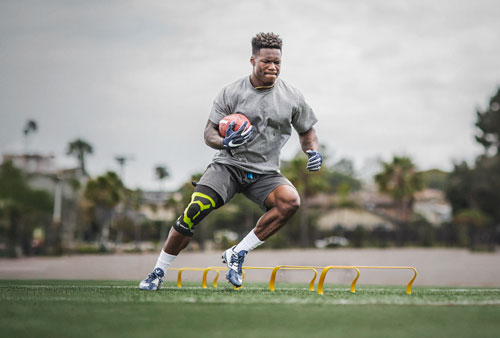
Recovering from an ITBS injury isn’t just about healing; it’s about rebuilding strength, restoring confidence, and getting back to the activities of your regular lifestyle. There are many over-the-counter braces and sleeves designed to support every phase of ITBS recovery, from injury and rehab to full return to sport.
Most Popular DonJoy Supports for Every Stage of ITBS Recovery
Choosing the right knee support can be an important part of managing Iliotibial Band Syndrome, especially as symptoms and activity levels change throughout recovery. Our curated collection of recommended ITBS supports includes options for every stage—from compression sleeves designed to support mild symptoms and everyday movement, to more supportive knee braces for moderate to severe IT band pain, as well as cold therapy sleeves that help manage swelling associated with ITBS.
Explore our best DonJoy supports for IT Band Syndrome to find the right level of support for your recovery and return to activity.
Prevention Strategies
Hip Strengthening Exercises: Strengthening of the primary hip abductors (Gluteus medius, gluteus minimus) and tensor fasciae latae (TFL) are critical in the prevention of ITBS. These muscles stabilize the pelvis and prevent further stress on the IT Band. Some hip strengthening exercises are:
- Side lying straight leg raises
- Clam shells
- Lateral band walks
- Glute bridges
Stretching: Stretching in the major muscle groups of the lower body, particularly the gluteal muscles and tensor fascia latae (TFL) will increase blood flow and decrease the stress placed on the IT Band. Maintaining flexibility in the lower body will improve function, mobility, and performance. Some stretching exercises are:
- Seated hip rotation
- Standing IT band stretches
- Side lying TFL stretch
- Supine banded glute medius stretch
Manual Therapy: Manual therapy is an excellent treatment option and tool for injury prevention. Like stretching, regularly performing manual therapy can help increase blood flow and circulation, reduce pain, and increase flexibility and range of motion, all of which are significant in preventing further injury. Some manual therapy techniques are:
- Myofascial (foam) rolling
- Therapeutic massage
- Therapeutic massage gun
- Trigger point release
Other examples of manual therapy that require professional assistance may include
- Instrument-assisted soft tissue mobilization (IASTM)
- Dry needling
- Myofascial decompression (MFS, cupping) .
Gait Training: Studies have shown that anatomical factors such as excessive foot pronation, hip abductor weakness, internal tibial torsion, and genu varum (bow legged) can lead to increased tension placed on the IT band leading to injury.4 In addition, poor running mechanics such as a longer stride length, heel or toe strike, or cross-over gait, can also contribute to ITBS. Consult a running coach if this may be an issue for you.
Warm Up/Cool Down: Be sure to factor extra time into your exercise regime for a proper warm up and cool down. Even 5-10 minutes of walking, jogging, or light peddling before and/or after exercise can make a difference in pain, mobility, and function.
Footwear: Be sure to wear good and supportive shoes that are not worn out. Old, worn-out shoes can lead to increased pain and further injury. It is recommended to change running shoes every 300-500 miles depending on your level of activity or type of activity.
Conclusion
Iliotibial Band Syndrome is a common yet often misunderstood condition that affects athletes and active individuals across a wide range of sports and activities. While it may begin as a mild discomfort on the outside of the knee, untreated ITBS can progress into a persistent and limiting injury. Fortunately, with a clear understanding of its causes, risk factors, and treatment options, patients can take proactive steps toward recovery and prevention.
By combining evidence-based practices with clinical experience, the goal of this article is to empower patients with the knowledge they need to manage ITBS effectively and get back to doing what they enjoy, safely and confidently.
References
- Johns Hopkins Medicine. (n.d.). Iliotibial Band Syndrome. Retrieved October 20, 2025
- Hospital for Special Surgery. (n.d.). IT Band Syndrome: Knee Pain Symptoms & Treatments. HSS Health Library. Retrieved October 20, 2025.
- Johns Hopkins Medicine. (n.d.). Iliotibial Band Syndrome. Retrieved October 20, 2025
- Hadeed A, Tapscott DC. Iliotibial Band Friction Syndrome. [Updated 2023 May 23]. In: StatPearls [Internet]. Treasure Island (FL): StatPearls Publishing; 2025 Jan.
- Simplicio, C. L., Purita, J., Murrell, W., Santos, G. S., Dos Santos, R. G., & Lana, J. F. S. D. (2020). Extracorporeal shock wave therapy mechanisms in muscoloskeletal regenerative medicine. Journal of Clinical Orthopaedics and Trauma, 11(Suppl 3), S309–S318.
- Andrews, J. R., Harrelson, G. L., & Wilk, K. E. (2012). Physical rehabilitation of the injured athlete (4th ed.). Saunders. Print.
- Baechle, Thomas R, Roger W Earle, and National Strength & Conditioning Association. Essentials of Strength Training and Conditioning. 3rd ed. Champaign, IL: Human Kinetics, 2008. Print.
- Opara M, Kozinc Ž. Stretching and Releasing of Iliotibial Band Complex in Patients with Iliotibial Band Syndrome: A Narrative Review. J Funct Morphol Kinesiol. 2023 Jun 4;8(2):74. doi: 10.3390/jfmk8020074 .
- Takeuchi K, Nakamura M, Matsuo S, Akizuki K, Mizuno T. Effects of Speed and Amplitude of Dynamic Stretching on the Flexibility and Strength of the Hamstrings. J Sports Sci Med. 2022 Dec 1;21(4):608-615.
- Aderem J, Louw QA. Biomechanical risk factors associated with iliotibial band syndrome in runners: a systematic review. BMC Musculoskelet Disord. 2015 Nov 16;16:356.
- Callaghan MJ, Parkes MJ, Hutchinson CE, Gait AD, Forsythe LM, Lunt M, Felson DT. A randomized trial of a neoprene sleeve to reduce pain associated with knee osteoarthritis. Rheumatology (Oxford). 2015;54(11):2043-2050.


