




What Is the Difference Between a Patella Stabilizing Brace and a Knee Strap?
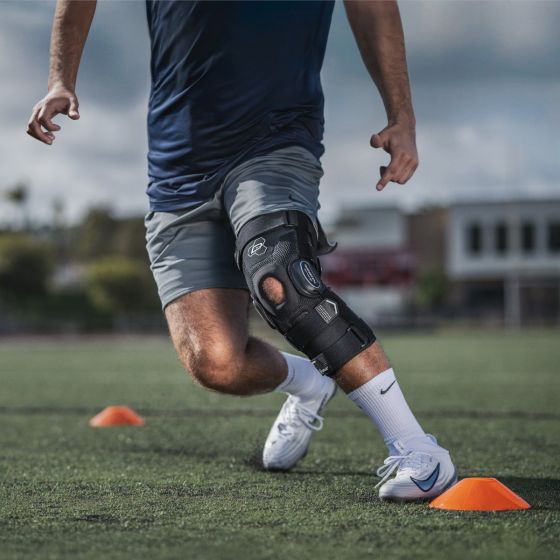
If you’ve been dealing with knee pain, especially around the kneecap, you’ve probably come across two very common support options: patella stabilizing braces and knee straps.
At first glance, they can seem interchangeable. Both are designed to help with front-of-knee pain. Both are worn during activity. And both are popular with runners, athletes, and active adults.
But they work in completely different ways.
A patella stabilizing brace is designed to guide and support the kneecap itself. A knee strap is designed to reduce strain on the patellar tendon just below the kneecap.
Understanding that difference is the key to choosing the right support for your symptoms.
Here’s how each one works, when they’re typically used, and how to tell which option makes more sense for your knee.
The Main Difference
The simplest way to think about it is this:
- A knee strap targets the patellar tendon.
- A patella stabilizing brace targets kneecap tracking and alignment.
A knee strap is small and focused. It applies pressure directly below the kneecap to reduce stress on the tendon.
A patella stabilizing brace is much larger. It wraps around the knee and helps guide the kneecap during movement.
Both can help reduce pain, but they solve different problems.
What Is a Knee Strap?
A knee strap, sometimes called an infrapatellar strap, is a narrow band worn just below the kneecap.
How It Works
The strap applies targeted pressure to the patellar tendon, which connects the kneecap to the shinbone.
This changes how force travels through the tendon during movement, especially during jumping, running, sprinting, or climbing stairs.
The goal is not to stabilize the whole knee. The goal is to reduce strain and irritation in the tendon itself.
What a Knee Strap Is Best For
Knee straps are commonly used for conditions involving tendon overload.
Jumper’s Knee
Also known as patellar tendonitis or patellar tendinopathy, this condition causes pain directly below the kneecap.
It is common in:
- Basketball players
- Volleyball players
- Runners
- Athletes who jump frequently
A strap can help reduce stress on the irritated tendon during activity.
Osgood-Schlatter Disease
This condition is common in growing adolescents, especially active teenagers involved in sports.
Pain develops where the patellar tendon attaches to the shinbone. A strap can help reduce pulling forces in that area.
Mild Activity-Related Pain Below the Kneecap
If your discomfort is highly localized under the kneecap and worsens with running or jumping, a strap may provide enough relief without adding bulk.
What Is a Patella Stabilizing Brace?
A patella stabilizing brace is a more comprehensive knee support designed to help keep the kneecap properly aligned during movement.
These braces usually include:
- A patella cutout
- A buttress or padded support around the kneecap
- Compression material
- Adjustable straps
- Sometimes side supports or hinges
Unlike a strap, a stabilizing brace covers much more of the knee joint.
How It Works
The brace helps guide the kneecap along its intended path as the knee bends and straightens.
This matters because some people experience poor kneecap tracking, where the patella shifts too far to one side or moves unevenly during motion.
The brace provides:
- Mechanical guidance
- Compression
- Improved proprioception
- Mild stability around the joint
The result is often better comfort and improved confidence during activity.
What a Patella Stabilizing Brace Is Best For
Patellofemoral Pain Syndrome
Often called runner’s knee, this condition causes pain around or behind the kneecap.
It is frequently related to tracking problems, overuse, muscle imbalance, or irritation where the kneecap meets the thigh bone.
A stabilizing brace can help improve alignment and reduce irritation during movement.
Mild Patellar Instability
If the kneecap feels like it shifts, slides, or moves unpredictably, a stabilizing brace may help control motion better than a simple strap.
History of Subluxation or Dislocation
People who have partially or fully dislocated their kneecap often benefit from the extra guidance provided by a stabilizing brace.
These braces help reduce excessive lateral movement that may contribute to recurrent instability.
General Front-of-Knee Pain With Movement
When pain is not isolated to the tendon itself and feels more related to kneecap mechanics, a stabilizing brace is usually the more appropriate category.
The Practical Difference in Daily Use
Knee Strap Feel
A knee strap is:
- Small
- Lightweight
- Low profile
- Easy to wear under clothing
- Less restrictive
Most people barely notice they are wearing one after a few minutes.
You maintain nearly full freedom of movement, which is why straps are popular during sports and exercise.
Patella Stabilizing Brace Feel
A stabilizing brace is:
- Larger
- More supportive
- More noticeable during wear
- Slightly more restrictive
- Better for overall knee guidance
While bulkier, it offers more comprehensive support around the entire joint.
Which One Gives More Support?
A patella stabilizing brace provides significantly more overall support than a knee strap.
That does not necessarily mean it is always the better choice.
More support is only helpful if the problem actually involves kneecap alignment or instability.
For isolated tendon irritation, a strap may work just as well while feeling lighter and less cumbersome.
Can Both Help With Runner’s Knee?
Yes, but in different situations.
The term “runner’s knee” is often used loosely, which creates confusion.
If the issue is:
- Tendon irritation below the kneecap, a strap may help more.
- Kneecap tracking pain around or behind the kneecap, a stabilizing brace is usually the better fit.
The exact location and type of pain matters.
Do These Supports Actually Heal the Knee?
Not by themselves.
Braces and straps are tools, not cures.
They are most effective when combined with proper rehab, strengthening, mobility work, and activity management.
For many people, the real long-term solution involves improving:
- Quad strength
- Hip stability
- Glute activation
- Movement mechanics
- Flexibility
The support device simply helps reduce irritation while those underlying issues are addressed.
What About the “Muscle Weakness” Concern?
Some people worry that wearing knee support will weaken their muscles over time.
Research generally does not support the idea that appropriate brace use causes muscle atrophy in active individuals.
In many cases, reducing pain actually helps people move more confidently and stay active enough to maintain strength.
The key is using support appropriately rather than depending on it constantly without addressing the root problem.
How to Choose Between Them
Here’s a simple way to think about it.
A Knee Strap May Be Better If:
- Pain is directly below the kneecap
- Symptoms worsen with jumping or sprinting
- You want minimal restriction
- The knee feels stable overall
- You mainly need tendon offloading
A Patella Stabilizing Brace May Be Better If:
- The kneecap feels unstable
- You have tracking problems
- Pain is around or behind the kneecap
- You have a history of dislocation or subluxation
- You want more overall support during movement
When You Should Get Evaluated
Sometimes the issue is more complex than choosing between two supports.
You should consider medical evaluation if:
- The knee repeatedly gives out
- The kneecap fully dislocates
- Swelling is severe
- Pain is worsening despite rest
- You cannot bear weight normally
- Locking or catching develops
In those cases, the underlying cause matters more than the brace category itself.
Final Thoughts
Patella stabilizing braces and knee straps are designed for different types of knee problems.
A knee strap is best for targeted tendon relief below the kneecap. It is small, lightweight, and ideal for reducing strain during activity.
A patella stabilizing brace provides broader support around the knee and helps guide the kneecap during movement. It is better suited for tracking issues, mild instability, and recurrent kneecap problems.
If the pain is focused in the tendon, a strap may be enough.
If the kneecap itself feels unstable or misaligned, a stabilizing brace is usually the better option.


