




What Should a Knee Brace for a Meniscus Tear Look Like? | Key Characteristics
Knee pain has a way of sneaking into everyday life. One awkward twist, a deep squat, a sudden pivot during a workout, and suddenly the joint feels unreliable. Meniscus injuries are especially frustrating because they sit right at the crossroads of movement and stability.
Choosing the right knee brace matters more than most people expect, and understanding what a knee brace for meniscus tear support should look like can save you from discomfort, setbacks, and wasted money.
A good brace does not just wrap the knee and hope for the best. It works with the anatomy of the joint, supports healing, and lets you move with confidence again. Let me explain what actually counts when you are comparing options.
Why The Meniscus Needs Targeted Support
The meniscus is a crescent-shaped piece of cartilage that cushions and stabilizes the knee. Each knee has two of them, one on the inside and one on the outside. Their job is to absorb shock and help the femur and tibia glide smoothly during movement.
When the meniscus is torn, even partially, the knee can feel unstable, swollen, or catch during motion. Some tears heal with rest and rehab, others require surgery, but in nearly all cases, controlled support is helpful.
The right knee brace for a torn meniscus limits harmful movement while still allowing safe motion, which is key for circulation and recovery.
Structure Comes First, Not Style
A meniscus tear brace should have a structured build. Soft elastic sleeves can feel comfortable, but comfort alone does not protect the joint during twisting or side-to-side stress. Look for a brace that combines firm materials with flexible zones so it can adapt as the knee bends.
Rigid side supports, or hinges, are often beneficial, especially for moderate to severe tears. They guide the knee through a more natural movement pattern and reduce strain on the injured cartilage. For milder cases, a reinforced sleeve with strategically placed support zones may be sufficient.
This is where many people go wrong. They buy something that looks good in the mirror but does not hold up during daily activity.
Compression That Does More Than Feel Tight
Compression is not just about snugness. A proper knee brace for meniscus tear recovery applies even pressure around the joint to help manage swelling and improve proprioception. That awareness of joint position plays a big role in preventing awkward movements that can worsen the injury.
The compression should feel secure without cutting off circulation. If your foot tingles or your knee feels numb, that is not support; it is a problem. Adjustable straps can help fine-tune the fit, especially if swelling changes throughout the day.
Hinges And Stabilizers Matter More Than You Think
Not every meniscus tear requires a hinged brace, but hinges are often a smart choice for active individuals or those returning to work or sports. Braces with hinges help control lateral movement and reduce rotational stress, which is exactly what irritates a torn meniscus.
Some braces use flexible stays instead of metal hinges. These can work well for light activity and everyday wear. The key is that the stabilizers are placed correctly along the sides of the knee, not floating or shifting as you move.
A brace that slides down or rotates is not doing its job.
Open Patella Vs Closed Design
Meniscus injuries do not always involve the kneecap, but patellar tracking still matters. Many effective braces use an open patella design with a reinforced ring. This helps keep the kneecap aligned and reduces pressure during bending.
Closed designs can work too, especially for compression-focused braces, but they should not directly press on the kneecap. If you feel discomfort there, the fit or design is likely wrong.
Range Of Motion Control Is A Quiet Hero
Some braces allow you to set limits on how far the knee can bend or straighten. This feature is especially useful after surgery or during early rehab. Controlled motion prevents reinjury while still encouraging movement, which helps maintain strength.
Even if you do not need full range control, a brace that naturally guides motion is valuable. It should feel supportive, not restrictive, almost like a steady hand reminding your knee how to move safely.
Breathability And Daily Wear Reality
Let us be honest. A brace that sits in a drawer does nothing for your recovery. Breathable materials, moisture-wicking liners, and low-profile designs make a big difference if you plan to wear the brace for hours at a time.
Bulky braces can be effective, but if they do not fit under clothing or feel uncomfortable during daily tasks, people stop using them. The best brace is one you will actually wear consistently.
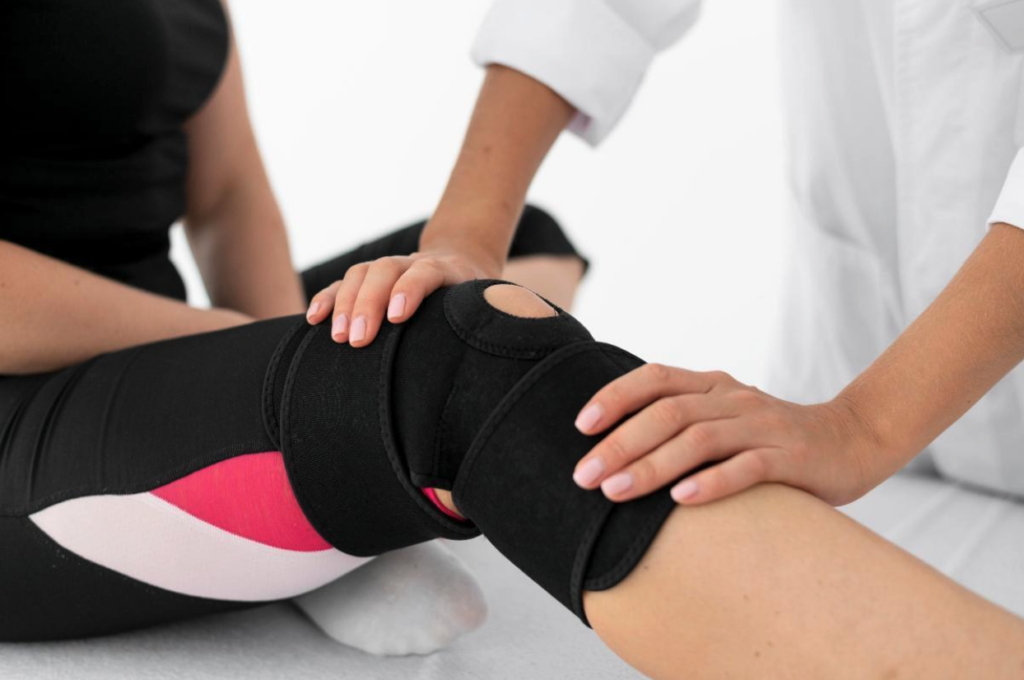
Alt Tag: A girl with knee pain sitting on a fitness mat.
Fit Is Non-Negotiable
The right knee brace size is crucial because even the most advanced design fails if the fit is wrong. Measure your knee exactly as instructed by the manufacturer, usually around the kneecap and thigh. Do not guess. Do not size up for comfort or size down for compression.
A well-fitted knee brace for meniscus tear support should stay in place during walking, sitting, and light activity without constant adjustment. If you find yourself tugging at it all day, keep looking.
Recovery Is A Process, Not A Shortcut
A brace is not a cure. It is a recovery tool. It works best when combined with proper rehab, strength training, and medical guidance. Some days you may feel great, other days stiff or sore. That is normal.
The right brace helps you move through recovery with more confidence and fewer setbacks. It protects without babying the joint, which is exactly what healing cartilage needs.
Choosing Support You Can Trust
Finding the right knee brace for meniscus tear recovery is about understanding your injury, your activity level, and your daily demands. When the design matches your needs, the brace becomes part of your routine instead of a nuisance.
Where Quality Support Makes A Difference
If you are looking for reliable, medically informed knee support options, the Don Joy Store offers braces designed with real-world recovery in mind. The right orthopedic support can change how your knee feels, not just during rehab but also in everyday life.


