




Tennis Ankle Injuries - Do I need an ankle brace?
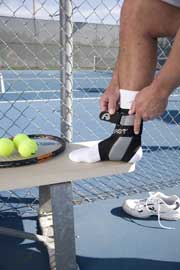
I am a casual tennis player who learned to play as a kid and picked the sport back up in my 40s by starting a small tennis group with friends. Early on, I rolled my ankle three times in a row before finally deciding I would be happier wearing an ankle brace. I did not choose anything heavy duty, a simple compression sleeve gave me enough support to stop those little strains that kept happening. That small bit of extra stability really helped me avoid the ice packs and kept me able to play every week.
A lot of tennis players reach the same turning point. After one sprain or a run of minor rolls, they start asking an important question: Should I wear an ankle brace when I play tennis?
In many cases the answer is yes. This is especially true if you want to stay on court consistently, avoid repeat injuries, and protect your ankles on demanding surfaces like hard courts or slick grass.
Below is a concise, updated guide to when and why tennis players should wear an ankle brace, based on injury history, court surface, age, and skill level. All recommendations focus on ankle braces available through DonJoy® Store, so you can match the right support to the way you play.
Why Wear An Ankle Brace For Tennis?
Tennis involves constant lateral movement, cutting, stops, and jumps. All of these stress the ligaments on the outside of the ankle.
An ankle brace can help:
- Prevent first-time sprains by limiting extreme rolling of the ankle
- Reduce repeat sprains if you have a history of injuries
- Support healing tissue when you return after a sprain
- Improve confidence so you move freely instead of protecting one leg
- Provide compression to manage mild swelling and soreness
An ankle brace is not a magic fix and does not replace good shoes, strength work, or proper warm up. It is a simple, proven way to cut your risk of ankle injury and protect ankles that are already vulnerable.
Always talk with your medical professional if you have significant pain, swelling, or instability.
Who Should Wear An Ankle Brace For Tennis?
You can group tennis players into three simple categories.
1. Players Who Have Never Sprained An Ankle
Goal: Prevention.
If you have never sprained your ankle, you may feel you do not “need” a brace. The problem is that it only takes one bad sprain to make that ankle more likely to sprain again.
Consider a brace if:
- You play mostly on hard courts or grass
- You are increasing your volume or intensity
- You have naturally loose joints or poor balance
- You are a junior player training or competing often
A light, low profile brace is usually enough for first line prevention.
2. Players With A History Of Ankle Sprains
Goal: Stop the cycle of repeat injuries.
If you have sprained your ankle even once, your risk of another sprain is higher. If you have rolled the same ankle multiple times, you are firmly in the “high risk” group.
You should strongly consider an ankle brace if:
- You feel your ankle is “wobbly” when you cut or land
- You sometimes catch an edge and feel a “mini roll”
- You hesitate to chase balls because you are worried about your ankle
In this group, an ankle brace is not just optional gear. It is a key tool to prevent chronic ankle instability and more time off the court.
3. Players Recovering From Ankle Injuries Or With Chronic Instability
Goal: Safe return to play and long term protection.
If you are coming back from a recent sprain or you have long term ankle instability, a brace can:
- Protect healing ligaments while you rebuild strength
- Limit risky movements while allowing you to run and hit
- Reduce fear, which can help you move more naturally
Your provider may recommend a more supportive brace during the early return phase, then a lighter brace as your ankle gets stronger.
How Court Surface Affects Ankle Brace Use
Different court surfaces produce different types of risk. Your ankle strategy should match where you play most.
Hard Courts
Hard courts are high grip and high impact.
- Shoes grab the surface when you plant or stop
- The surface does not absorb much force
- Sudden stops and direction changes put strong torque through the ankle
Hard courts are common, especially indoors, which means many players stack up a lot of hours on them. An ankle brace is especially useful if you:
- Play mostly on hard courts
- Play at high intensity (league, tournaments, or long baseline rallies)
- Already have a history of sprains
Clay Courts
Clay allows sliding, which reduces impact but introduces slip and catch risks.
Risks on clay:
- Foot can slide farther than expected
- Clumps or bad spots can “grab” the shoe
- Sudden stops during a partial slide can twist the ankle
If you are not a confident slider, or if the clay is dry, bumpy, or uneven, an ankle brace can help protect against awkward catches and quick rolls.
Grass Courts
Grass is soft with low traction, especially when damp.
Risks on grass:
- Shoes can lose grip when pushing off or changing direction
- Uneven spots or slick patches can cause slips and ankle rolls
If you are playing on grass, especially wet or worn grass, an ankle brace is a smart precaution. Combine it with grass-specific footwear and extra warm up time.
Age And Skill Level: Who Needs More Support?
Juniors And Youth Players
Younger athletes are still developing strength, balance, and coordination. They also tend to play frequently and push hard.
Ankle braces can help:
- Protect growing joints during heavy practice and match play
- Reduce the odds of a first significant sprain
- Build the habit of taking injury prevention seriously
For juniors who train multiple times per week or play tournaments, preventive bracing is often a good idea.
Adult And Senior Players
As we age:
- Ligaments lose some elasticity
- Muscles may be weaker, especially without regular strength training
- Balance often declines
Older players are more likely to have old sprains, arthritis, or stiffness that can make ankles less reliable. Ankle braces can:
- Provide extra stability during quick changes of direction
- Reduce the chance of a fall or bad roll
- Help manage mild instability or soreness
If you are in your 40s, 50s, or older and have any history of ankle issues, wearing a brace for tennis and pickleball is a very reasonable choice.
Beginners Versus Competitive Players
- Beginners and recreational players often have less efficient footwork and less conditioning. This can mean more awkward steps and unexpected rolls. Braces offer a safety net while movement patterns and strength improve.
- Competitive and advanced players move faster, cut harder, and often slide aggressively. The forces going through the ankle are higher. Wearing braces can protect against a single misstep that could derail a season.
If you play matches, leagues, or tournaments, consider using braces anytime you plan to move at full intensity.
Why Many Athletes Brace Both Ankles
Even if only one ankle has been injured, many athletes choose to brace both ankles.
Reasons to brace both sides:
- Keeps movement and support symmetrical
- Protects the “good” ankle from becoming the next injury
- Reduces the chance of overloading the uninjured side
For tennis, where you move in every direction and plant on both legs, bracing both ankles provides balanced protection.
Best Types Of Ankle Braces For Tennis
Tennis players usually want low profile braces that fit easily in court shoes and provide support without feeling bulky.
Below are common categories, focusing on options available through DonJoy® Store. Always follow product instructions and sizing guides.
Light To Moderate Support (Great For Prevention And Mild Instability)
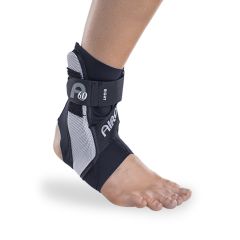
1. Aircast A60 Ankle Brace
A slim, sport-specific brace with molded supports on each side.
- Designed to limit rolling without restricting natural up-and-down movement
- Very lightweight and breathable
- Left and right specific for a close anatomical fit
- Ideal for: prevention, mild instability, and players who value comfort
Many tennis players choose the Aircast A60 as their everyday match brace because it is easy to wear and fits well inside tennis shoes.
2. DonJoy Stabilizing Pro Ankle Brace
A classic lace-up ankle brace with figure-8 straps.
- Ballistic nylon body for durability
- Laces plus straps simulate a professional tape job
- Low profile design that fits inside most tennis shoes
- Ideal for: players with a sprain history who want a firm, adjustable fit
This is a strong choice if you want more structure than a sleeve but still want something that feels flexible and customizable.
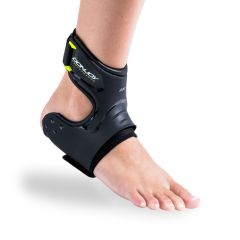
3. DonJoy Performance POD Ankle Brace
A modern, minimal brace designed for “protection on demand.”
- Very light and low profile
- Flexible in normal motion, stiffens to block excessive rolling
- No laces, quick to put on and adjust
- Ideal for: players who dislike bulky braces but need reliable support
The POD brace is a great option if you want a brace that feels almost invisible until you need it.
Maximum Support (For Severe Instability And Return From Serious Sprains)
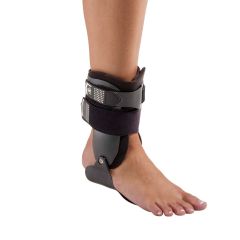
4. DonJoy Velocity Ankle Brace
A semi-rigid brace with hinged side shells for maximum stability.
- Hinges allow normal up-and-down ankle motion
- Side shells and straps restrict inversion and eversion that cause sprains
- Padding for comfort during longer matches
- Ideal for: players with significant instability, multiple prior sprains, or returning from a more serious ankle injury
The Velocity is a good choice when your top priority is not rolling your ankle again, even if that means a slightly more structured feel.
How To Get The Most From Your Ankle Brace
A brace works best as part of a complete plan. For tennis players:
- Choose the right level of support
- Light to moderate support for prevention and mild issues
- Maximum support for severe instability or early return after a bigger injury
- Fit it correctly
- Follow the sizing chart and instructions
- Make sure the brace is snug without cutting off circulation
- Wear appropriate socks to avoid rubbing
- Brace both ankles when possible
- Especially if you compete regularly or have ever sprained one side
- Combine bracing with strength and balance work
- Calf raises, single-leg balance drills, and band work for ankle muscles
- Regular warm up and mobility work before you play
- Monitor your body
- If pain or swelling is significant, see a medical professional
- Use their guidance on when to progress from maximum support to lighter support
Final Thoughts: Staying On Court, Not On The Sidelines
Tennis will always involve sharp cuts, sudden stops, and the occasional bad landing. You cannot remove all risk, but you can reduce it.
An ankle brace is a simple way to:
- Protect against first-time sprains
- Prevent repeat injuries
- Support recovery from instability or recent sprains
By factoring in court surface, age, skill level, and injury history, and choosing the right DonJoy® Store ankle brace, you give yourself the best chance to keep playing consistently and confidently.If you are unsure which brace is right for your ankle and your tennis, talk with your healthcare provider, then explore the ankle brace options at DonJoy® Store and match your brace to your style of play.
-
 $36.41(38) Reviews
Rigid side stabilizers help control ankle rollover without restricting natural movement. The low-profile brace fits easily inside athletic footwear, while Breath-O-Prene® fabric promotes airflow to help keep feet cool and comfortable throughout the day.
Recommended for:
- Weak or Sprained Ankles
- Chronic Ankle Instability
- Post-Cast/Post-Injury Support
- Preventing Recurring Injury
-
 $33.92(33) ReviewsLock in elite-level support with the DonJoy Stabilizing Pro Ankle Brace. Designed for high-impact sports, it helps prevent rolls, sprains, and re-injury. Stay powerful, protected, and ready to dominate every play.
The Stabilizing PRO Ankle Brace can be used to treat or prevent the following ankle injuries:
- Ankle Instability
- Reinjury Prevention
- Ankle Roll Protection
-
 $123.69(57) ReviewsElite-level ankle protection trusted by pros and built for every athlete. The Velocity Brace locks in stability without sacrificing speed or comfort. Stop rolling ankles—start dominating your game.
The Velocity Ankle Brace can be used to treat or prevent the following ankle injuries:
- Inversion Ankle Sprains
- Eversion Ankle Sprains
- Unnatural Rotation of Ankle
-
 $37.74(47) Reviews
Athlete-focused ankle brace combines foam-filled aircells for cushioned compression and proven Air-Stirrup® protection against ankle roll. An ATF cross strap enhances targeted ligament stability . Step-in design and automatic heel adjustment make it easy to apply and wear all day.
Recommended for:
- Chronic Ankle Instability
- Sprained Ligaments
- Strained Muscles or Tendons
-
 Special Price $60.99 Regular Price $60.99(75) Reviews
Moderate ankle support and roll control while allowing 360° movement. Compression similar to taping, easy on/off design, and low-profile fit for comfort in shoes. POD® technology engages support only when needed, helping to prevent ankle rolls and sprains during high-impact sports or active daily activity.
Recommended for:
- Ankle Rolls
- Grade I & II Ankle Sprains
- Chronic Ankle Instability
- Re-injury Prevention
-
 Special Price $69.99 Regular Price $77.99(13) Reviews
Designed for maximum lateral support, rigid uprights and stirrup shell control side-to-side ankle motion with a structured support system. Dual compression straps and an anatomical footplate work together to hold position and maintain targeted pressure. Delivers secure, locked-in stability for sport and athletic activities.
Recommended for:
- Medial/Lateral Ligament Protection
- Ankle Sprains
- Ankle Roll
- Ankle Instability
-
 Special Price $38.99 Regular Price $42.99(4) ReviewsStep up your game with the DonJoy Anaform Lace-Up Ankle Brace — pro-level support without the bulk. Engineered for comfort, built for performance, trusted for recovery. Prevent injuries. Recover faster. Move with confidence.
The Anaform Lace-Up Ankle Brace can be used to treat or prevent the following ankle injuries:
- Mild Sprains
- Strains & Instabilities
- Re-Enjury Prevention
-
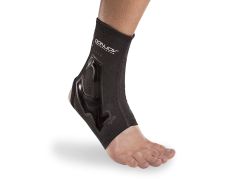 Special Price $39.99 Regular Price $44.99(29) Reviews
Three-zone compression and responsive silicone banding work together to stabilize ankle movement and control swelling. Targeted pressure zones support circulation while built-in medial and lateral reinforcement helps resist rollover and maintain alignment. The low-profile sleeve fits comfortably inside athletic footwear, delivering consistent support without restricting motion.
Recommended for:
- Mild to Moderate Ligament Sprains
- Mild to Moderate Tendon Strains
- Ankle Instability
-
 Special Price $51.99 Regular Price $57.99(14) Reviews
60° molded stabilizers and highly responsive web strapping work together to control ankle motion and resist rollover forces. The low-profile Bionic system creates a secure fit with adjustable support that maintains alignment and stability during sport without restricting mobility.
Recommended for:
- Mild to Moderate Ligament Sprains
- Mild to Moderate Tendon Strains
- Ankle Instability
-
 Special Price $47.99 Regular Price $52.99(3) Reviews
Speed-wrap lacing with figure-8 straps create a secure, taping-like ankle stabilization system with adjustable moderate support and compression control. Designed for quick application, it locks in the heel while supporting confident and safe movement during sport.
Recommended for:
- Medial/Lateral Ligament Protection
- Ankle Sprains
- Ankle Instability
-
 Special Price $17.99 Regular Price $19.99(1) ReviewSeamless comfort meets everyday support in this breathable, lightweight sleeve. Compression that boosts circulation and keeps you moving pain-free. Slide it on, power through — recovery never felt this good. Learn More


Follow our size chart on selecting the size that fits you:
Mens Shoe Size / Women's Shoe Size / Aircast A60 Size
Mens Up to 7 / Womens 5-8.5 / Small
Mens 7.5-11.5 / Womens 9-13 / Medium
Mens 12+ / Womens 13.5+ / Large
I want to buy your A60
I m wearing uk 8 shoe size
Mens Shoe Size
Small - Up to 7
Medium - 7.5 - 11.5
Large - 12+
Womens Shoe Size
Small - 5-8.5
Medium - 9-13
Large - 13.5+
No, ankle braces do not help relieve pain from shin splints. Talk to your physician about the best treatment for shin splints. Try rest and ice to bring down inflammation and wearing a compression shin splint sleeve may help.