




Ankle braces for a sprain: types, sprain grades, and how to choose
Most people shop for an ankle brace in the wrong order. They pick a brace, then try to work out what it actually does. Going the other way is easier. Once you know what kind of sprain you have and how bad it is, the brace mostly picks itself.
Here is the short version. A grade 1 sprain usually calls for a compression sleeve or a lace-up brace. A grade 2 sprain calls for a lace-up or a stirrup brace. A grade 3 sprain calls for a hinged brace, and often a walking boot before that.
The rest of this guide explains how to tell which one you have.
What happens when you sprain an ankle
A sprain means the ligaments holding the joint together got stretched past their limit or torn outright. Clinicians sort these injuries two ways: by where the damage is, and by how severe it is. Both matter when you choose a brace, because they tell you how much motion needs to be blocked and for how long.
Where the sprain happened
Lateral ankle sprains are by far the most common, somewhere around 90 to 95 percent of all ankle sprains. They happen on an inversion injury, when the foot rolls inward and stresses the ligaments on the outside of the ankle. The anterior talofibular ligament, or ATFL, takes most of the damage. If you have rolled an ankle stepping off a curb or landing on someone's foot, this is almost certainly what happened.
Medial ankle sprains are the reverse. The foot rolls outward on an eversion injury and stresses the deltoid ligament on the inside of the ankle. These make up about 15 percent of cases. They tend to be more serious than lateral sprains, because the deltoid ligament is strong enough that it takes real force to tear it.
High ankle sprains, also called syndesmotic sprains, are a different injury altogether. The damage is to the ligaments and membrane holding the two lower leg bones, the tibia and fibula, together. They usually come from forced external rotation or hyper-dorsiflexion, and they take considerably longer to heal than a standard lateral sprain. If your pain sits above the ankle joint rather than below it, get it looked at before you assume it is a routine roll.
How bad it is: the three grades
Grade 1 is mild. The ligament fibers are stretched with some microscopic tearing. You get mild tenderness and swelling, but the joint stays stable.
Grade 2 is moderate. The ligament is partially torn. Expect moderate pain, swelling, bruising, and some looseness in the joint when you test it.
Grade 3 is severe. The ligament is completely torn or ruptured. This brings significant instability, severe pain, and swelling across the whole area.
Matching a brace to your sprain
| Grade | What you feel | Brace type |
|---|---|---|
| Grade 1 (mild) | Tenderness, mild swelling, stable joint | Compression sleeve or lace-up |
| Grade 2 (moderate) | Pain, bruising, slight looseness | Lace-up or stirrup |
| Grade 3 (severe) | Instability, severe pain, heavy swelling | Hinged brace, or a walking boot first |
Activity level and where you are in recovery shift this too. The same grade 2 sprain might need a stirrup brace in week one and a lace-up by week four.
The five types of ankle braces
Compression sleeves
Compression sleeves give light stabilization without restricting your range of motion. They work for grade 1 sprains, minor swelling, and chronic tendonitis. Part of what they do is improve proprioception, which is your body's sense of where the joint is in space. That awareness is a real part of not rolling the same ankle again.
Sleeves are the least protective option here. If your joint feels loose, you need more than a sleeve.
Lace-up braces
Lace-up braces suit grade 1 and grade 2 sprains, chronic instability, and high-impact sports like basketball and soccer. They limit side-to-side rolling, both inversion and eversion, while leaving the up-and-down motion alone so you can still run and jump normally.
This is the brace most athletes end up in long term. It gives you enough control to keep the ankle from rolling without changing how you move. DonJoy's lace-up options cover both the recovery and the return-to-play end of that.
Stirrup braces
Stirrup braces get used for moderate to severe lateral sprains in the early healing phase. Rigid plastic uprights sit on either side of the ankle and block lateral movement so the damaged ligament can heal without being pulled on. Most are lined with air or gel cushions, which help manage the swelling in the first days after the injury.
The Aircast AirSport and A60 are the common picks in this category, and you can see the full range on the sprain and instability page.
Hinged braces
Hinged braces are for grade 3 tears, post-surgical recovery, and athletes in high-contact sports. The hinges block the side-rolling motions that caused the injury while preserving a natural heel-to-toe gait.
That gait piece matters more than it sounds. When a brace forces you to walk differently, the compensation travels up the leg and you end up with knee or hip pain on top of the ankle you were trying to protect. A hinge keeps your walking pattern intact.
Rigid braces and walking boots
Rigid braces and CAM walking boots give the most protection available. They are for severe grade 3 tears, stress fractures, and the period right after surgery. These immobilize the joint almost completely so healing tissue is left undisturbed.
A boot is not something to self-prescribe. If you are considering one, you should have a diagnosis first.
You will probably need more than one brace
Most people need more than one brace over a full recovery, and that is normal. The usual path starts with a rigid immobilizer while the tissue is at its most fragile, moves to a semi-rigid hinged brace through rehab, and finishes with a functional lace-up brace for the return to sport.
Skipping the middle step is a common mistake. Going straight from a boot to a soft sleeve leaves the ankle unsupported at the exact point where it feels good enough to trust and is not yet ready. DonJoy sorts its ankle line by support level, mild through maximum, which makes stepping down one level at a time easier to plan.
Braces for sport
Sport adds two demands: the brace has to control the motion that causes ankle rolls, and it has to fit inside your footwear.
For basketball and soccer, where cutting and landing on other players' feet cause most sprains, lace-up braces are the standard. They handle the inversion risk without slowing you down. For contact sports where the force is higher, a hinged brace gives more protection while keeping your stride natural. DonJoy's basketball ankle braces are built around the low-profile requirement, since a brace that will not fit in a shoe does not get worn.
Check your footwear before you buy
Rigid and hinged braces add real bulk to the inside of a shoe. Plan on going up half a size in your footwear so the fit stays comfortable. This catches a lot of people out, especially with cleats and boots that were already snug.
Compression sleeves and most lace-ups fit in normal shoes without a size change.
When to see someone before you brace
Two signs mean you should get imaging before you put anything on the ankle. The first is not being able to bear weight on it. The second is pain directly over a bone rather than over soft tissue.
Either one can point to a fracture, and an over-the-counter brace cannot support a broken bone. An X-ray or MRI first tells you whether you are dealing with a sprain at all. If you are unsure which brace fits your injury, DonJoy's Brace Advisor tool walks you through it based on your injury and activity level.
Common questions
What is the best ankle brace for a sprained ankle? It depends on the grade. Grade 1 sprains do well in a compression sleeve or lace-up. Grade 2 sprains need a lace-up or stirrup brace. Grade 3 sprains need a hinged brace, and sometimes a walking boot first.
What type of ankle brace do I need for a grade 3 sprain? A hinged brace, which blocks side-rolling while letting you walk normally. For a severe grade 3 tear or right after surgery, a rigid brace or CAM walking boot gives the immobilization the tissue needs before you step down to a hinge.
Should I choose a lace-up or a stirrup brace? Stirrup braces are the early-healing choice for moderate to severe lateral sprains, since the rigid uprights and air or gel lining control both movement and swelling. Lace-ups are the choice once you are moving again, and for ongoing use in sport.
What is a high ankle sprain, and is it different? A high or syndesmotic sprain damages the ligaments connecting the tibia and fibula, usually from forced external rotation or hyper-dorsiflexion. It heals considerably more slowly than a lateral sprain, so get it properly diagnosed rather than treating it like a normal roll.
Will an ankle brace fit inside my shoes? Sleeves and lace-ups usually do. Rigid and hinged braces add enough bulk that you should size your footwear up by half a size.
Do I need an X-ray before wearing a brace? If you cannot put weight on the ankle, or the pain is directly over a bone, yes. A brace bought off the shelf cannot support a fracture.
Choosing yours
Start with the grade, then match the support level, then check the fit in your shoes. If your sprain is severe enough that you are unsure, get it diagnosed before you buy, because the brace that helps a grade 2 sprain is the wrong brace for a fracture.
Browse the full range of ankle braces and supports by support level.
-
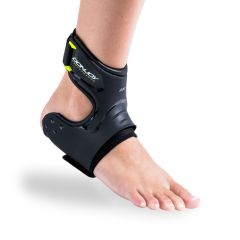 Special Price $60.99 Regular Price $60.99(75) Reviews
Moderate ankle support and roll control while allowing 360° movement. Compression similar to taping, easy on/off design, and low-profile fit for comfort in shoes. POD® technology engages support only when needed, helping to prevent ankle rolls and sprains during high-impact sports or active daily activity.
Recommended for:
- Ankle Rolls
- Grade I & II Ankle Sprains
- Chronic Ankle Instability
- Re-injury Prevention
-
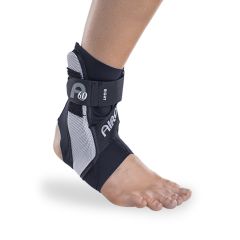 $36.41(38) Reviews
Rigid side stabilizers help control ankle rollover without restricting natural movement. The low-profile brace fits easily inside athletic footwear, while Breath-O-Prene® fabric promotes airflow to help keep feet cool and comfortable throughout the day.
Recommended for:
- Weak or Sprained Ankles
- Chronic Ankle Instability
- Post-Cast/Post-Injury Support
- Preventing Recurring Injury
-
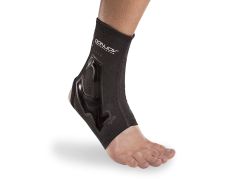 Special Price $39.99 Regular Price $44.99(29) Reviews
Three-zone compression and responsive silicone banding work together to stabilize ankle movement and control swelling. Targeted pressure zones support circulation while built-in medial and lateral reinforcement helps resist rollover and maintain alignment. The low-profile sleeve fits comfortably inside athletic footwear, delivering consistent support without restricting motion.
Recommended for:
- Mild to Moderate Ligament Sprains
- Mild to Moderate Tendon Strains
- Ankle Instability
-
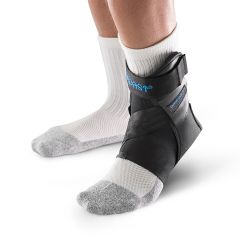 $82.99(52) Reviews
Adjustable arch-lift system stabilizes the ankle and offloads the posterior tibial tendon for controlled support. This braces is specifically designed to elevate the arch, improve alignment, and maintain mobility during early-stage PTTD recovery.
Recommended for:
- Posterior tibialis tendon dysfunction (PTTD, Stage I & early Stage II)
- Adult acquired flat foot
-
 $41.92(2) Reviews
Protect from ankle rollover during sports with a dialed-in BOA® Fit System and supportive stirrup shell that helps limit side-to-side motion. Delivers consistent moderate support for sports and daily activity.
Recommended for:
- Inversion and eversion due to ankle ligament tears
- Moderate to severe ankle sprains
- Prevention of injury
- Post-operative use
- Chronic ankle ligament instability
-
 $33.92(33) ReviewsLock in elite-level support with the DonJoy Stabilizing Pro Ankle Brace. Designed for high-impact sports, it helps prevent rolls, sprains, and re-injury. Stay powerful, protected, and ready to dominate every play.
The Stabilizing PRO Ankle Brace can be used to treat or prevent the following ankle injuries:
- Ankle Instability
- Reinjury Prevention
- Ankle Roll Protection
-
 Special Price $51.99 Regular Price $57.99(14) Reviews
60° molded stabilizers and highly responsive web strapping work together to control ankle motion and resist rollover forces. The low-profile Bionic system creates a secure fit with adjustable support that maintains alignment and stability during sport without restricting mobility.
Recommended for:
- Mild to Moderate Ligament Sprains
- Mild to Moderate Tendon Strains
- Ankle Instability
-
 Special Price $47.99 Regular Price $52.99(3) Reviews
Speed-wrap lacing with figure-8 straps create a secure, taping-like ankle stabilization system with adjustable moderate support and compression control. Designed for quick application, it locks in the heel while supporting confident and safe movement during sport.
Recommended for:
- Medial/Lateral Ligament Protection
- Ankle Sprains
- Ankle Instability
-
 $37.74(47) Reviews
Athlete-focused ankle brace combines foam-filled aircells for cushioned compression and proven Air-Stirrup® protection against ankle roll. An ATF cross strap enhances targeted ligament stability . Step-in design and automatic heel adjustment make it easy to apply and wear all day.
Recommended for:
- Chronic Ankle Instability
- Sprained Ligaments
- Strained Muscles or Tendons
-
 Special Price $69.99 Regular Price $77.99(13) Reviews
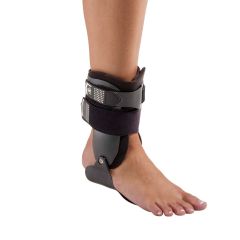
Designed for maximum lateral support, rigid uprights and stirrup shell control side-to-side ankle motion with a structured support system. Dual compression straps and an anatomical footplate work together to hold position and maintain targeted pressure. Delivers secure, locked-in stability for sport and athletic activities.
Recommended for:
- Medial/Lateral Ligament Protection
- Ankle Sprains
- Ankle Roll
- Ankle Instability
-
 Special Price $38.99 Regular Price $42.99(4) ReviewsStep up your game with the DonJoy Anaform Lace-Up Ankle Brace — pro-level support without the bulk. Engineered for comfort, built for performance, trusted for recovery. Prevent injuries. Recover faster. Move with confidence.
The Anaform Lace-Up Ankle Brace can be used to treat or prevent the following ankle injuries:
- Mild Sprains
- Strains & Instabilities
- Re-Enjury Prevention
-
 $123.69(57) Reviews
Semi-rigid hinged shell design controls ankle rolling while allowing natural flexion during athletic movement. Rigid uprights and the R3 ratchet system work together for locked-in compression and impact protection. Low-profile construction fits inside athletic shoes and cleats for high-support stability during sports and recovery.
Recommended for:
- Acute Ankle Sprains
- Chronic Ankle Instabilities
- High Ankle Sprains
- Reinjury Prevention
-
 Special Price $28.99 Regular Price $31.99Slip on support that feels like a second skin — with figure-8 straps for locked-in stability. Lightweight, low-profile, and made to move with you. Support your stride. Stay in the game. Feel the difference.
The Figure 8 Ankle Sleeve with Straps can be used to treat or prevent the following ankle injuries:
- Mild Ankle Sprains or Strains
- Inflammation
- Ligament Injury Learn More
-
 Special Price $17.99 Regular Price $19.99(1) ReviewSeamless comfort meets everyday support in this breathable, lightweight sleeve. Compression that boosts circulation and keeps you moving pain-free. Slide it on, power through — recovery never felt this good. Learn More
 -
 Special Price $11.99 Regular Price $12.99(2) ReviewsAll-day comfort. All-around support. Zero distractions. The figure-8 design delivers targeted compression and stability where you need it most. Perfect for recovery, prevention, and staying active without limits.
The Figure-8 Ankle Support can be used to treat or prevent the following ankle injuries:
- Mild Ankle Sprains
- Swelling
- Tendonitis Learn More
-
 $28.36(11) ReviewsReliable ankle stability without the bulk — perfect for daily wear and recovery. Built-in stays and adjustable straps deliver firm, customizable support. Move confidently. Heal smarter. Stay supported every step of the way.
The Stabilized Ankle Support can be used to treat or prevent the following ankle injuries:
- Ankle Instability
- Reinjury Prevention
- Ankle Roll Protection
-
 $35.01(33) ReviewsExperience top-tier ankle support with Aircast’s patented Aircell technology. Designed to reduce swelling and speed recovery without sacrificing comfort. Trusted by athletes and doctors alike—protect your ankle and get back in the game.
The Air-Stirrup Ankle Brace can be used to treat or prevent the following ankle injuries:
- 3rd Degree Ankle Sprain
- Acute Injuries of the Ankle
-
 Special Price $17.99 Regular Price $19.99(4) ReviewsMaximum support with a low-profile design — stability that moves with you. Reinforced straps lock in your ankle to prevent twists and sprains. Stay confident, stay active, and protect your every step. Learn More
 -
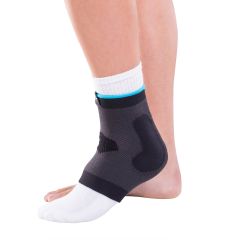 Special Price $19.99 Regular Price $22.99Comfort meets support in this lightweight, elastic ankle sleeve. Provides gentle compression to reduce swelling and enhance recovery. Perfect for everyday wear—stay active and pain-free with ease. Learn More
 -
 Special Price $9.99 Regular Price $11.99(1) ReviewSlip into all-day comfort with lightweight, flexible support that moves with you. Boost circulation and reduce swelling without slowing down your pace. Your perfect partner for injury prevention and active recovery. Learn More
 -
 $39.72(1) ReviewAll-in-one care kit designed to speed up your ankle sprain recovery. Includes trusted Aircast support and essential rehab tools for every step. Get back on your feet faster—stronger, safer, and pain-free. Learn More
 -
 $33.71(61) ReviewsRevolutionary heel support that cushions and stabilizes with every step. Lightweight design delivers targeted compression and comfort all day long. Protect your ankle, reduce pain, and stay active without limits.
The Airheel Arch & Heel Support can be used to treat or prevent the following ankle injuries:
- Airheel Arch & Heel Support
- Achilles Tendonitis


