




Lace-up vs. stirrup ankle brace: how to choose after a sprain
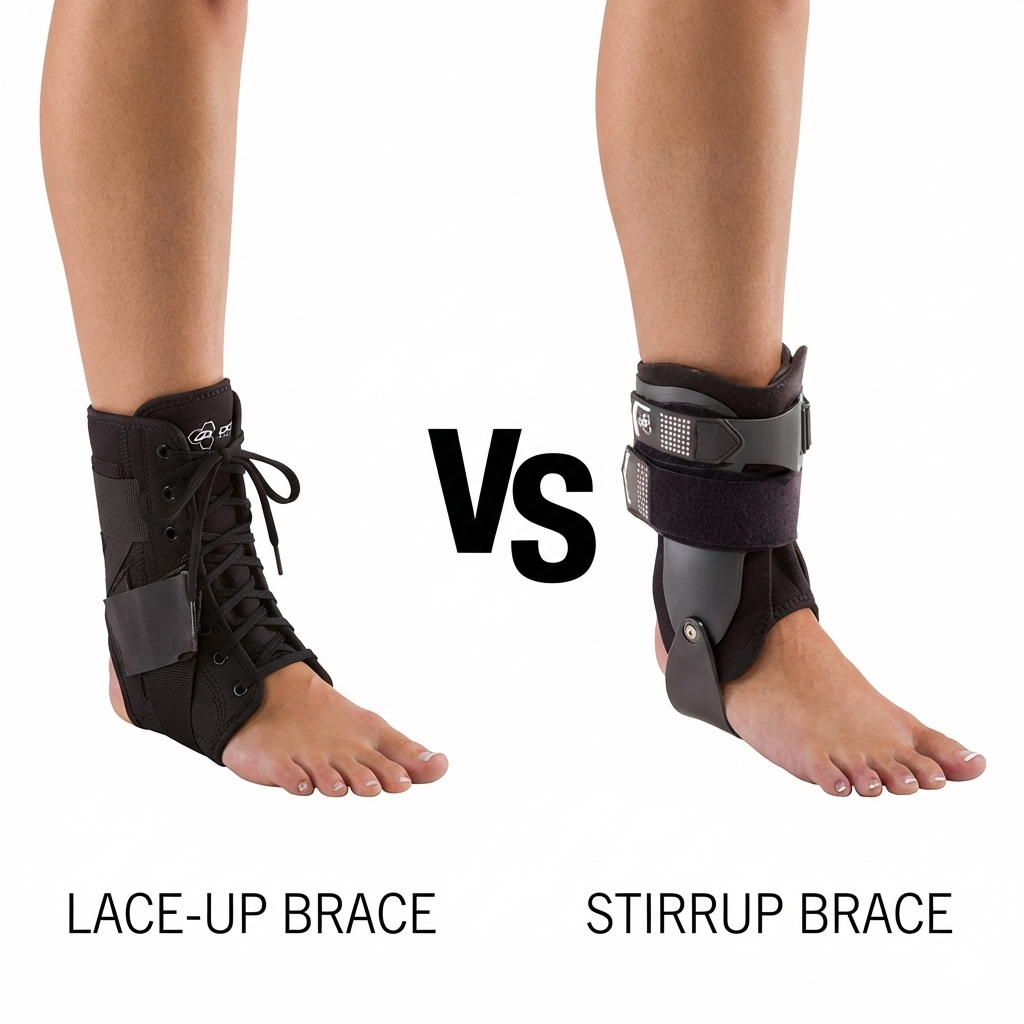
A lace-up brace is a fabric boot you tighten by hand. A stirrup brace is two hard shells joined under the heel. They're both sold as "ankle braces," and they protect the ankle in different ways.
Short version: lace-ups move with you and are easier to run in. Stirrups block the specific motion that sprains your ankle, and they keep blocking it all game.
Quick answer
- Mild sprain, minor swelling, want support during activity: compression sleeve or lightweight lace-up.
- Moderate sprain with bruising and some looseness: lace-up with side stays, or a semi-rigid stirrup.
- Severe sprain, obvious instability, post-surgical: walking boot first, then a hinged brace.
- Preventing a repeat sprain in a court or field sport: lace-up, worn every session.
- Coming out of a walking boot: stirrup or hinged, then step down as strength returns.
Why the ankle keeps re-spraining
Roughly 25,000 ankle sprains happen every day in the United States. About 85% of them are lateral inversion sprains, where the foot rolls inward past what the joint is built to handle. The damage follows a predictable order. The anterior talofibular ligament, or ATFL, goes first because it's the primary restraint against the talus sliding forward. Under bigger forces, the calcaneofibular ligament, or CFL, follows.
Here's the part that matters for brace selection. A sprain wrecks the mechanoreceptors in the joint, which are what tell your brain where your ankle is in space. Proprioception drops off. The ligaments themselves heal with scar tissue that's mechanically weaker than the original. Put those together and the odds of another sprain in the first year run 40% to 70%, and 30% to 40% of people go on to develop chronic ankle instability.
So the brace isn't only holding a healing ligament together. It's compensating for a sense that hasn't come back yet.
Start with the grade
Clinicians sort sprains into three grades, and the grade drives both the timeline and the hardware.
Grade I is a stretched ligament with microscopic tearing and a stable joint. Recovery runs 1 to 3 weeks. A compression sleeve or a lightweight lace-up covers it, mostly to manage minor swelling and give you some proprioceptive feedback while you're active.
Grade II is a partial tear with moderate pain, bruising, swelling, and slight looseness in the joint. Figure 3 to 6 weeks, sometimes 4 to 8. This is the sweet spot for a lace-up reinforced with side stays or a semi-rigid stirrup brace.
Grade III is a complete rupture with real instability and heavy swelling. Recovery takes 6 to 12 weeks and often longer. It starts with hard stabilization in a walking boot or a rigid brace, then steps down to a hinged brace as things settle.
The five types, and what each actually does
Compression sleeves are elastic garments. They give warmth, mild swelling control, and skin feedback that helps proprioception. They provide zero mechanical restraint against rolling. Most comfortable option on the shelf, least stable.
Lace-up braces are fabric boots that lock the heel and midfoot. They limit side-to-side rolling while leaving your up-and-down motion alone, which is why runners and court athletes get along with them. The catch is material relaxation: fabric and laces stretch, and a lace-up can shed up to 50% of its lateral stability over a single session of active play. Retightening at halftime is not optional.
Figure-8 braces belong in this group. The name describes the strap pattern, which wraps the foot and ankle the way an athletic trainer's tape job does. It's usually built into a lace-up as an extra layer of strapping over the laces, and it exists to slow down that stretch-out problem.
Rigid and semi-rigid stirrup braces are hard plastic side panels joined under the heel. They physically block side-to-side rotation and leave forward-and-back motion alone. The uprights are lined, and the lining is a real choice: pneumatic air bladders pulse swelling down during the acute phase, gel inserts can be pre-cooled for cryotherapy, and foam pads sit lower profile for active rehab.
Hinged braces put rigid uprights on either side with an actual hinge at the ankle bone. You walk normally, and there's a hard stop against rolling. This is the Grade III, post-surgical, and contact-sport option.
Hybrid braces combine a soft textile core with semi-elastic or non-elastic strapping, sometimes over a rigid exoskeleton. They can deliver 20% to 35% more lateral support than a traditional stirrup.
Lace-up vs. stirrup, head to head
Pick a lace-up if you're running, cutting, or playing a sport where you need the ankle to feel like an ankle. It fits in a normal shoe, it adjusts on the fly, and it's the format with the best prevention data behind it. Accept that you'll be retightening it.
Pick a stirrup if the priority is stopping inversion and keeping it stopped. Hard shells don't relax. If you're in the acute phase of a Grade II sprain with swelling to manage, the air bladder version does two jobs at once.
Plenty of people end up owning both: a stirrup for the first few weeks, a lace-up once they're back to full activity.
What about taping?
Taping works. It also loses 40% to 50% of its mechanical support inside 20 minutes of dynamic exercise, it has to be reapplied every session, and it irritates skin considerably more than a modern reusable brace. For most people outside a training room with a full-time staff, a brace is the more practical answer.
Bracing to prevent the next one
Two large prospective trials from McGuine put numbers on this. Prophylactic lace-up bracing cut acute lateral sprains by 67% in high school basketball players and 57% in football players. Worth knowing: bracing didn't change how bad the sprains were when they did happen. Median time lost from play was 5 days either way. The brace prevents sprains, it doesn't soften them.
If you've already sprained the ankle once, the case is stronger. Functional bracing programs show around a 70% reduction in acute injuries for people with a prior sprain history.
Coming out of a walking boot
Boots are for absolute stabilization, and they have a shelf life. Immobilization past about 10 days starts working against you: muscle wasting, joint stiffness, fewer collagen fibers, and lower long-term tensile strength in the tissue you're trying to rebuild.
There's a reason for that. Healthy ligaments are about 85% Type I collagen, the strong stuff. Early in healing, fibroblasts lay down Type III collagen instead, which is weaker and disorganized. Converting it into parallel, properly cross-linked Type I fibers depends heavily on the tissue getting loaded. Early mobilization and progressive weight-bearing drive blood flow to the area and use controlled stress to tell the new fibers which way to line up.
The clinical difference shows up fast. In one trial, Grade II sprain patients treated with a functional semi-rigid stirrup brace and wrap were walking unassisted at a median of 10 days. The group put in a rigid cast took 24.
Practically, that means stepping out of the boot into a stirrup or hinged brace, then down to a lace-up as strength and confidence come back. The brace is what makes the loading safe enough to do.
The brace isn't the whole plan
A brace protects the joint. It doesn't rehabilitate it, and leaning on one as your only strategy can leave the ankle weaker over time.
Two things have to happen alongside it. You need to rebuild proprioception, which is single-leg balance work, wobble boards, anything that forces the joint to report its position under load. And you need to strengthen the peroneal muscles along the outside of the ankle. Those are the joint's primary dynamic stabilizers against the exact inversion force that sprained you, and they're what eventually lets you stop wearing a brace at all.
So, which one
Running and cutting: lace-up. Acute swelling and instability: stirrup. Grade III or post-op: hinged, after the boot. Preventing a repeat: lace-up, every session, retightened at halftime.
This article is for general information and isn't a substitute for a diagnosis. If you can't bear weight, the ankle looks deformed, or pain and swelling aren't improving, get it evaluated. A fracture can present a lot like a bad sprain.
-
 Special Price $60.99 Regular Price $60.99(75) Reviews
Moderate ankle support and roll control while allowing 360° movement. Compression similar to taping, easy on/off design, and low-profile fit for comfort in shoes. POD® technology engages support only when needed, helping to prevent ankle rolls and sprains during high-impact sports or active daily activity.
Recommended for:
- Ankle Rolls
- Grade I & II Ankle Sprains
- Chronic Ankle Instability
- Re-injury Prevention
-
 $36.41(38) Reviews
Rigid side stabilizers help control ankle rollover without restricting natural movement. The low-profile brace fits easily inside athletic footwear, while Breath-O-Prene® fabric promotes airflow to help keep feet cool and comfortable throughout the day.
Recommended for:
- Weak or Sprained Ankles
- Chronic Ankle Instability
- Post-Cast/Post-Injury Support
- Preventing Recurring Injury
-
 Special Price $39.99 Regular Price $44.99(29) Reviews
Three-zone compression and responsive silicone banding work together to stabilize ankle movement and control swelling. Targeted pressure zones support circulation while built-in medial and lateral reinforcement helps resist rollover and maintain alignment. The low-profile sleeve fits comfortably inside athletic footwear, delivering consistent support without restricting motion.
Recommended for:
- Mild to Moderate Ligament Sprains
- Mild to Moderate Tendon Strains
- Ankle Instability
-
 $82.99(52) Reviews
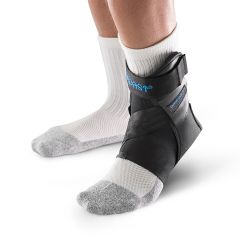
Adjustable arch-lift system stabilizes the ankle and offloads the posterior tibial tendon for controlled support. This braces is specifically designed to elevate the arch, improve alignment, and maintain mobility during early-stage PTTD recovery.
Recommended for:
- Posterior tibialis tendon dysfunction (PTTD, Stage I & early Stage II)
- Adult acquired flat foot
-
 $41.92(2) Reviews
Protect from ankle rollover during sports with a dialed-in BOA® Fit System and supportive stirrup shell that helps limit side-to-side motion. Delivers consistent moderate support for sports and daily activity.
Recommended for:
- Inversion and eversion due to ankle ligament tears
- Moderate to severe ankle sprains
- Prevention of injury
- Post-operative use
- Chronic ankle ligament instability
-
 $33.92(33) ReviewsLock in elite-level support with the DonJoy Stabilizing Pro Ankle Brace. Designed for high-impact sports, it helps prevent rolls, sprains, and re-injury. Stay powerful, protected, and ready to dominate every play.
The Stabilizing PRO Ankle Brace can be used to treat or prevent the following ankle injuries:
- Ankle Instability
- Reinjury Prevention
- Ankle Roll Protection
-
 Special Price $51.99 Regular Price $57.99(14) Reviews
60° molded stabilizers and highly responsive web strapping work together to control ankle motion and resist rollover forces. The low-profile Bionic system creates a secure fit with adjustable support that maintains alignment and stability during sport without restricting mobility.
Recommended for:
- Mild to Moderate Ligament Sprains
- Mild to Moderate Tendon Strains
- Ankle Instability
-
 Special Price $47.99 Regular Price $52.99(3) Reviews
Speed-wrap lacing with figure-8 straps create a secure, taping-like ankle stabilization system with adjustable moderate support and compression control. Designed for quick application, it locks in the heel while supporting confident and safe movement during sport.
Recommended for:
- Medial/Lateral Ligament Protection
- Ankle Sprains
- Ankle Instability
-
 $37.74(47) Reviews
Athlete-focused ankle brace combines foam-filled aircells for cushioned compression and proven Air-Stirrup® protection against ankle roll. An ATF cross strap enhances targeted ligament stability . Step-in design and automatic heel adjustment make it easy to apply and wear all day.
Recommended for:
- Chronic Ankle Instability
- Sprained Ligaments
- Strained Muscles or Tendons
-
 Special Price $69.99 Regular Price $77.99(13) Reviews
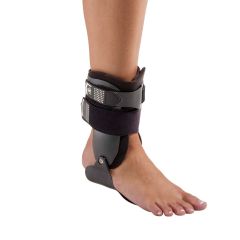
Designed for maximum lateral support, rigid uprights and stirrup shell control side-to-side ankle motion with a structured support system. Dual compression straps and an anatomical footplate work together to hold position and maintain targeted pressure. Delivers secure, locked-in stability for sport and athletic activities.
Recommended for:
- Medial/Lateral Ligament Protection
- Ankle Sprains
- Ankle Roll
- Ankle Instability
-
 Special Price $38.99 Regular Price $42.99(4) ReviewsStep up your game with the DonJoy Anaform Lace-Up Ankle Brace — pro-level support without the bulk. Engineered for comfort, built for performance, trusted for recovery. Prevent injuries. Recover faster. Move with confidence.
The Anaform Lace-Up Ankle Brace can be used to treat or prevent the following ankle injuries:
- Mild Sprains
- Strains & Instabilities
- Re-Enjury Prevention
-
 $123.69(57) Reviews
Semi-rigid hinged shell design controls ankle rolling while allowing natural flexion during athletic movement. Rigid uprights and the R3 ratchet system work together for locked-in compression and impact protection. Low-profile construction fits inside athletic shoes and cleats for high-support stability during sports and recovery.
Recommended for:
- Acute Ankle Sprains
- Chronic Ankle Instabilities
- High Ankle Sprains
- Reinjury Prevention
-
 Special Price $28.99 Regular Price $31.99Slip on support that feels like a second skin — with figure-8 straps for locked-in stability. Lightweight, low-profile, and made to move with you. Support your stride. Stay in the game. Feel the difference.
The Figure 8 Ankle Sleeve with Straps can be used to treat or prevent the following ankle injuries:
- Mild Ankle Sprains or Strains
- Inflammation
- Ligament Injury Learn More
-
 Special Price $17.99 Regular Price $19.99(1) ReviewSeamless comfort meets everyday support in this breathable, lightweight sleeve. Compression that boosts circulation and keeps you moving pain-free. Slide it on, power through — recovery never felt this good. Learn More
 -
 Special Price $11.99 Regular Price $12.99(2) ReviewsAll-day comfort. All-around support. Zero distractions. The figure-8 design delivers targeted compression and stability where you need it most. Perfect for recovery, prevention, and staying active without limits.
The Figure-8 Ankle Support can be used to treat or prevent the following ankle injuries:
- Mild Ankle Sprains
- Swelling
- Tendonitis Learn More
-
 $28.36(11) ReviewsReliable ankle stability without the bulk — perfect for daily wear and recovery. Built-in stays and adjustable straps deliver firm, customizable support. Move confidently. Heal smarter. Stay supported every step of the way.
The Stabilized Ankle Support can be used to treat or prevent the following ankle injuries:
- Ankle Instability
- Reinjury Prevention
- Ankle Roll Protection
-
 $35.01(33) ReviewsExperience top-tier ankle support with Aircast’s patented Aircell technology. Designed to reduce swelling and speed recovery without sacrificing comfort. Trusted by athletes and doctors alike—protect your ankle and get back in the game.
The Air-Stirrup Ankle Brace can be used to treat or prevent the following ankle injuries:
- 3rd Degree Ankle Sprain
- Acute Injuries of the Ankle
-
 Special Price $17.99 Regular Price $19.99(4) ReviewsMaximum support with a low-profile design — stability that moves with you. Reinforced straps lock in your ankle to prevent twists and sprains. Stay confident, stay active, and protect your every step. Learn More
 -
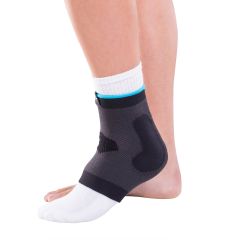 Special Price $19.99 Regular Price $22.99Comfort meets support in this lightweight, elastic ankle sleeve. Provides gentle compression to reduce swelling and enhance recovery. Perfect for everyday wear—stay active and pain-free with ease. Learn More
 -
 Special Price $9.99 Regular Price $11.99(1) ReviewSlip into all-day comfort with lightweight, flexible support that moves with you. Boost circulation and reduce swelling without slowing down your pace. Your perfect partner for injury prevention and active recovery. Learn More
 -
 $39.72(1) ReviewAll-in-one care kit designed to speed up your ankle sprain recovery. Includes trusted Aircast support and essential rehab tools for every step. Get back on your feet faster—stronger, safer, and pain-free. Learn More
 -
 $33.71(61) ReviewsRevolutionary heel support that cushions and stabilizes with every step. Lightweight design delivers targeted compression and comfort all day long. Protect your ankle, reduce pain, and stay active without limits.
The Airheel Arch & Heel Support can be used to treat or prevent the following ankle injuries:
- Airheel Arch & Heel Support
- Achilles Tendonitis


