




The best knee brace for soccer: how to choose one that survives 90 minutes
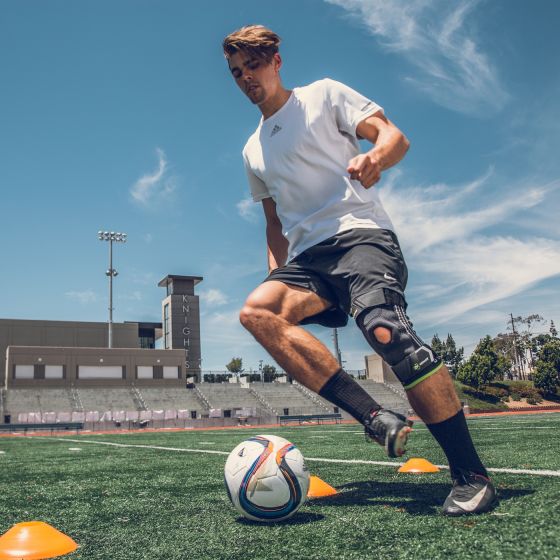
Soccer is hard on knees in a specific way. The damage usually doesn't come from a tackle. It comes from planting a foot to cut, landing off balance, or decelerating at full speed, which is why so many ACL injuries in the sport happen with nobody else touching the player. One study of professional male players put the share of ACL injuries with no direct knee contact at 88%.
That changes what you should look for. A brace that only cushions impact is solving the wrong problem. What matters is control of the knee through rotation and side-to-side movement, and whether the thing stays where you put it while you sprint.
Here is how to work through the decision.
Start with support level, not features
Everything else is secondary to this. Match the brace to your injury history or your reason for wearing one.
Compression sleeves suit prevention, mild strains, tendinitis, and general joint warmth. They give you light sensory feedback and a sense of where the joint is in space, which some players find steadies them. They do not physically stop the knee from moving into a bad position, so don't buy one expecting ligament protection.
Hinged braces are the answer if you're coming back from an ACL or MCL tear, or from surgery. Rigid side bars physically block the lateral and rotational movement that causes reinjury. This is the category where you should be taking direction from your surgeon or athletic trainer rather than a product page.
Patellar tendon straps are a different tool entirely. They're narrow bands worn below the kneecap that press on the patellar tendon to take load off it. Good for jumper's knee and Osgood-Schlatter, which shows up often in youth players. They barely affect agility because they barely cover anything.
ITB straps sit above the joint and press on the iliotibial band, for players dealing with IT band friction syndrome. Same idea, different tissue.
If you're stepping down from a rigid post-op brace to something you can actually play in, that transition is worth a conversation with whoever managed your rehab. It's the point where people most often over- or under-brace themselves.
What a brace has to do to survive a match
Once you know your support level, these are the things that separate a brace that works on the pitch from one that annoys you into taking it off at halftime.
It has to stay put. This is the complaint that kills most soccer braces. Sprint repeatedly and a poorly anchored brace walks down your leg until the hinge is sitting below the joint, at which point it's doing nothing. Look for silicone grip strips, calf anchors, or anti-migration bands. Measure your knee circumference at the center of the kneecap rather than guessing from your clothing size, and if you fall between sizes, size up. Anatomically left and right specific braces fit better than universal ones.
It has to breathe. You're in it for 90 minutes plus warmup. Thick neoprene traps heat and sweat, and a saturated brace changes fit as the match goes on. Compression knits built from spandex, nylon, and polyester blends handle a full match better. So do neoprene alternatives like DonJoy's Drytex, which uses a nylon core with polyester lycra to move air through the fabric.
It has to fit under a sock. A bulky brace interferes with ball control and gets in the way of your shin guard. Low profile matters more in soccer than in most sports for exactly this reason.
If it's hinged, the hinges should be polycentric. Single-axis hinges pivot on one point, which is not how a knee works. Polycentric hinges use multiple pivot points to follow the knee's rolling and gliding motion, so the brace feels less mechanical through deep flexion and full stride.
Open or closed patella is a real choice, not a marketing detail. An open patella design leaves the kneecap exposed to cut pressure on it and help with tracking. A closed patella design compresses the whole joint evenly, which suits generalized swelling better.
And it has to take abuse. Slide tackles, turf burn, cleats, and repeat washing. Reinforced stitching and stretch-resistant fabric are what keep a brace from going slack by midseason.
Will the referee let you wear it
This trips up more players than it should, and the answer under the Laws of the Game is straightforward.
Law 4 says a player must not use equipment or wear anything that is dangerous, and that non-dangerous protective equipment including knee protectors made of soft, lightweight padded material is permitted. The referee inspects players before kickoff and has final say.
In practice that means a soft sleeve or strap is almost never a problem. A hinged brace is fine as long as the hinges are fully padded or covered, with no exposed metal and no sharp or protruding edges. Manufacturers supply covers for this reason. Rigid post-op braces with bare uprights are the ones that get turned away.
Two practical notes. Youth leagues often codify this explicitly, and AYSO's policy is that knee braces are allowed provided the brace is adequately padded and covered in the referee's opinion so it can't injure anyone else. And since the referee is the one making the call, show them the brace during the pre-match inspection rather than finding out in the 12th minute.
Does a brace slow you down
The usual worry is that bracing costs you a step, or that the knee gets weaker from relying on it. There's real evidence on the first part.
Researchers at Virginia Tech tested 28 athletes who had undergone ACL reconstruction, running them through a modified agility T-test and vertical jump height both with and without a functional knee brace. Performance improved over the three months after they were cleared to return to sport, and wearing the brace did not hinder physical performance. Their conclusion was that a brace could be worn during the return-to-sport transition without concern.
That's a small study on a specific population, so don't read it as proof that every brace is free of any cost. But it undercuts the assumption that a functional brace is automatically a performance tax.
The confidence effect is worth naming too. Plenty of players return from injury guarding the leg without realizing it. A brace that lets you commit to a cut is doing something useful even if you can't measure it.
Working through the DonJoy soccer lineup
Roughly by support level:
For maximum protection, the DonJoy Performance Bionic FullStop is built around FullStop dampening hinges and a four-strap system designed to keep the knee out of high-risk positions and cut strain on the ACL during cutting and deceleration. It's the choice for players with an ACL history who want serious control. Check the hinge padding before match play.
The DonJoy Performance Bionic Knee Brace gives you maximum lateral support through dual polycentric hinges, in a low-profile wraparound with 4mm neoprene and an open hex buttress for the kneecap.
For moderate support with better breathability, the Drytex Sport Hinged and Deluxe Hinged braces use polycentric hinges with a mesh popliteal cutout and an open patella donut. The Drytex fabric is the reason to look here if heat or skin irritation has been your problem.
The DonJoy Performance Hinged Knit Knee is the one DonJoy names for soccer directly. Four-way stretch knit with removable plastic hinges, a patella buttress, and dual adjustable straps. It handles overuse injuries, patella tracking problems, and mild sprains, and it's light enough to forget about.
Below that sit compression sleeves with silicone banding and anti-migration construction for prevention and mild support, and patella straps for tendon pain.
If you only remember one thing
Buy for the injury, not the sport. A player with an ACL reconstruction and a player with jumper's knee both play soccer and need completely different braces. Get the support level right first, then use breathability, profile, and anti-migration features to pick between the options at that level.
And whatever you land on, put it on before a training session rather than before a match. You want to find out how it behaves at minute 70 when it doesn't matter.
-
 $163.99(13) Reviews
Stabilize your shoulder and stay active with targeted support designed to help limit risky movement during activity. The DonJoy Sully Shoulder Brace is built for athletes and active individuals recovering from shoulder instability, dislocations, or rotator cuff injuries. Its adjustable strap system helps control motion, enhance joint awareness, and provide confident support during sport and performance activities.
Recommended for:
- Posterior Instabilities
- Muscle Strains
- Rotator Cuff Deceleration
- Anterior Instabilities
- Inferior Instabilities
- Multi-Directional Instabilities
-
 $42.50(11) ReviewsLock in powerful wrist support with DonJoy Wrist Wraps Wrist Brace for pain relief and injury prevention. Adjustable compression stabilizes wrist joints during sports, workouts, and daily activities. Durable, breathable design keeps you comfortable while boosting recovery and performance. Learn More
 -
 $133.36(11) Reviews
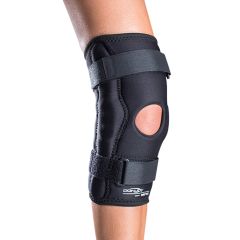
Bilateral hinges and compressive fabric work together to stabilize the MCL and LCL by limiting side-to-side movement. The hinged frame, flexible sleeve construction, and adjustable fit work together to guide motion without restricting mobility. Built for daily wear, it delivers consistent support during work, light activity, or rehabilitation.
Recommended for:
- Mild to Moderate MCL and/or LCL Sprains
- Mild Arthritis
- Post Arthroscopic Meniscetomy
- Mild Knee Instabilities
- Soft Tissue Injuries
-
 $59.99(11) ReviewsEngineered for athletes demanding stability without restriction. The open popliteal design minimizes friction, ideal for those with neoprene sensitivities or in warm climates. Bilateral hinges and Drytex fabric deliver breathable compression, supporting ligament injuries, meniscus tears, or mild OA. Learn More
 -
 $47.67(6) ReviewsGame-Ready Protection Shield your opponents and your brace during intense play with padded coverage. Durable, flexible, and built for contact sports—because safety never takes a timeout. Learn More
 -
 Special Price $60.99 Regular Price $67.99(5) Reviews
The BOA® Fit System tightens evenly around the wrist to control positioning without restricting finger movement. Lace guides, knit compression, and a removable palmar stay work together to stabilize or limit motion as needed. Built for training, recovery, and daily wear while keeping fingers free for natural movement.
Recommended for:
- Carpal Tunnel
- Mild Sprains and Strains
- Tendonitis
- Wrist Instabilities
-
 $219.99(33) Reviews
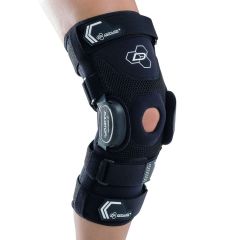
Maximum+ support for ACL, meniscus, and knee ligaments. Dual Fullstop dampening hinges and 4-strap design protect the knee and prevent hyperextension. Bilateral polycentric hinges keep knee from at-risk positions while breathable mesh and ergonomic design ensure comfort and a secure fit. Ideal for athletes and active adults.
Recommended for:
- ACL Injury
- Meniscus Injury
- MCL and LCL Protection
- Chronic Knee Instability
- Hyperextension
- Moderate Tendon Strain
- Moderate Ligament Injury
-
 $33.92(33) ReviewsLock in elite-level support with the DonJoy Stabilizing Pro Ankle Brace. Designed for high-impact sports, it helps prevent rolls, sprains, and re-injury. Stay powerful, protected, and ready to dominate every play.
The Stabilizing PRO Ankle Brace can be used to treat or prevent the following ankle injuries:
- Ankle Instability
- Reinjury Prevention
- Ankle Roll Protection
-
 Special Price $46.99 Regular Price $51.99(51) Reviews
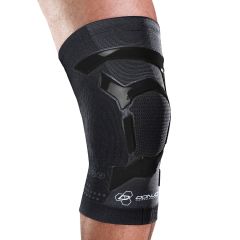
Mild to moderate support from a powerful combination of compression and bracing technology. Three zones of silicone banding enhance joint stability and comfort. Carbonized bamboo knit fibers regulate heat and minimize odor, while anti-migration technology keeps the sleeve secure for athletes and active adults.
Recommended for:
- Strains
- Soreness
- Repetitive Motion Injuries
- Proprioception
- Inflammation/Swelling
- Degenerative Meniscus
- Tendonitis
- Mild Joint Instability
- Compression
-
 $220.46(14) ReviewsThe DonJoy Shoulder Stabilizer Brace is engineered to provide superior support and controlled range of motion for individuals recovering from shoulder injuries. Its innovative design offers customizable immobilization, making it ideal for conditions like glenohumeral dislocations, rotator cuff tears, and acromioclavicular separations. Crafted from durable, latex-free black polyester Lycra®, this brace ensures comfort and durability during the healing process. Learn More
 -
 $37.74(47) Reviews
Athlete-focused ankle brace combines foam-filled aircells for cushioned compression and proven Air-Stirrup® protection against ankle roll. An ATF cross strap enhances targeted ligament stability . Step-in design and automatic heel adjustment make it easy to apply and wear all day.
Recommended for:
- Chronic Ankle Instability
- Sprained Ligaments
- Strained Muscles or Tendons
-
 Special Price $58.99 Regular Price $65.99(4) Reviews
Four vertical lumbar stays and a double pull strap system stabilize and compress the lower back to control uncomfortable movement. Stretch webbing and contoured panels work together to deliver adjustable compression and structure to the lower back. Designed for athletes and active adults, it provides a secure, low-profile fit during sports, training, or recovery.
Recommended for:
- Low Back Pain
- Lumbar Support
- Mild Lower Back Strains
-
 $36.31(47) ReviewsThe DonJoy ComfortFORM Back Support is designed to provide comfortable, low-profile support for the lower back. Constructed with durable power mesh elastic and a molded lumbar compression pad, it offers support for the sacrolumbar region of the spine. Overlapping double pull straps provide additional support to the lumbar and abdominal area to promote proper spinal alignment and help prevent and protect injuries, including strains and sprains. Silicone gripper strips on either side of the back pad help prevent migration. Latex-free and suitable for wear under or over clothing. Learn More
 -
 $52.01(12) ReviewsEngineered for athletes demanding knee stability without compromise. The sewn-in horseshoe pad and spiral stays provide targeted patellar support, ideal for conditions like Osgood-Schlatter or patellar instability. Adjustable thigh and calf straps ensure a secure fit, allowing you to focus on performance without distraction.
The Performer Patella Knee Support can be used to treat or prevent the following knee injuries:
- Sprains
- Muscle Strain
- Patella Instability
- Osgood-Schlatter
- Mild to Moderate ACL, MCL, LCL & PCL Support
-
 Special Price $115.99 Regular Price $128.99(46) Reviews
Moderate support from innovative silicone web design that absorbs shock and helps relieve knee discomfort. Dual-axis hinges enhance ligament stability and natural movement. The lightweight, low-profile brace stays secure and comfortable during sport and is ideal for athletes and active adults.
Recommended for:
- Patellofemoral Syndrome
- Mild Sprains and Strains
- Knee Instabilities
- Inflammation/Swelling
- Soreness
- Arthritis
- Bursitis
- Overuse Injuries
-
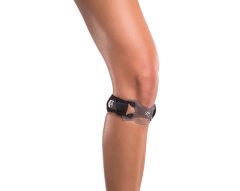 Special Price $34.99 Regular Price $38.99(18) ReviewsTargeted Relief for Peak Performance Innovative silicone web applies even pressure to the patellar tendon, alleviating runner's knee discomfort. Lightweight, contoured design with breathable back pad ensures comfort during intense activities.
The Webtech Knee Strap can be used to treat or prevent the following knee injuries:
- Overuse Injuries
- Patella Tracking Disorder
- Muscle Imbalance
- Strained Muscle or Tendons
- Mild Sprains
- Blunt Trauma
-
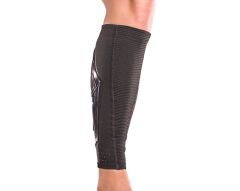 Special Price $29.99 Regular Price $33.99(8) ReviewsBracing to the calf muscle Learn More
 -
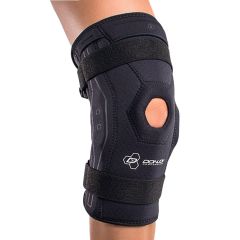 Special Price $77.99 Regular Price $86.99(68) Reviews
Maximum support for MCL, LCL, and meniscus injuries with padded bilateral hinges and open patella buttress for added knee stability. Bilateral polycentric hinges stabilize against lateral forces and prevent hyperextension. Breathable 4 mm neoprene and ergonomic wraparound design provide comfort with a secure fit for athletes and active adults.
Recommended for:
- MCL and LCL Instabilities
- Knee Hyperextension
- General Meniscus Support
-
 Special Price $51.99 Regular Price $57.99(14) Reviews
60° molded stabilizers and highly responsive web strapping work together to control ankle motion and resist rollover forces. The low-profile Bionic system creates a secure fit with adjustable support that maintains alignment and stability during sport without restricting mobility.
Recommended for:
- Mild to Moderate Ligament Sprains
- Mild to Moderate Tendon Strains
- Ankle Instability
-
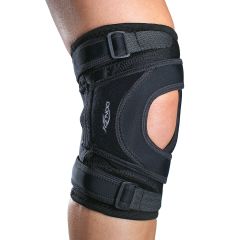 $90.85(61) Reviews
Moderate support specifically designed for acute patella subluxation or maltracking. Low-profile design with dual density buttress provides constant corrective force to guide kneecap into place. Removable nylon hinges offer medial/lateral support, while breathable, antimicrobial fabric ensures comfort for long-term wear.
Recommended for:
- Patella Subluxation
- Medial/Lateral Instability
- Post-Arthroscopic Menisectomy
- Patellar Tracking Disorder
- Chondromalacia
-
 $58.23(60) Reviews
Moderate patella support using J-shaped buttress. Corrects patella maltracking while proving compression and warmth to promote healing. Stabilizes kneecap, prevents subluxation/dislocation, and guides proper tracking. This versatile brace with removable hinges is ideal for active adults seeking comfort and protection.
Recommended for:
- Patellofemoral Syndrome
- Acute Patellar Subluxation
- Knee Dislocation
- Knee Malalignmnet
- Mild Patella Discomfort
-
 $115.99(154) ReviewsShock-absorbing elastomeric webbing shifts pain away from your knee. Dual-axis hinges and breathable mesh keep you moving with confidence. Ideal for athletes with patellofemoral pain, Osgood-Schlatter, or mild OA.
The Reaction WEB Knee Brace can be used to treat or prevent the following knee injuries:
- Front of Knee Pain
- Osgood-Schlatter
- Mild Arthritis
- Kneecap Misalignment
- Overuse Injuries
- Muscle Imbalance
- Blunt Trauma
- Runner’s Knee
- Patellar Dislocation
- Chondromalacia
-
 $36.41(38) Reviews
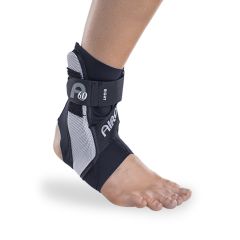
Rigid side stabilizers help control ankle rollover without restricting natural movement. The low-profile brace fits easily inside athletic footwear, while Breath-O-Prene® fabric promotes airflow to help keep feet cool and comfortable throughout the day.
Recommended for:
- Weak or Sprained Ankles
- Chronic Ankle Instability
- Post-Cast/Post-Injury Support
- Preventing Recurring Injury
-
 Special Price $24.99 Regular Price $24.99(5) ReviewsLightweight Support, Maximum Performance Experience mild compression and warmth with a 2mm neoprene sleeve designed for active recovery. Ergonomic fit and anti-slip tech keep you moving confidently—on the field, in the gym, or on the trail. Learn More
 -
 Special Price $39.99 Regular Price $44.99(29) Reviews
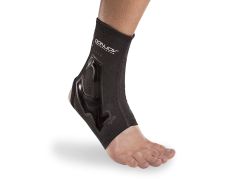
Three-zone compression and responsive silicone banding work together to stabilize ankle movement and control swelling. Targeted pressure zones support circulation while built-in medial and lateral reinforcement helps resist rollover and maintain alignment. The low-profile sleeve fits comfortably inside athletic footwear, delivering consistent support without restricting motion.
Recommended for:
- Mild to Moderate Ligament Sprains
- Mild to Moderate Tendon Strains
- Ankle Instability
-
 Special Price $60.99 Regular Price $60.99(75) Reviews
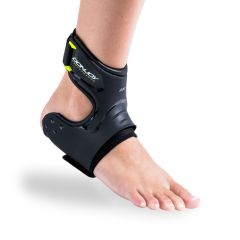
Moderate ankle support and roll control while allowing 360° movement. Compression similar to taping, easy on/off design, and low-profile fit for comfort in shoes. POD® technology engages support only when needed, helping to prevent ankle rolls and sprains during high-impact sports or active daily activity.
Recommended for:
- Ankle Rolls
- Grade I & II Ankle Sprains
- Chronic Ankle Instability
- Re-injury Prevention
-
 (2) ReviewsDesigned to absorb impact and protect from bruises or other common impact injuries. Learn More
 -
 Special Price $69.99 Regular Price $77.99(13) Reviews
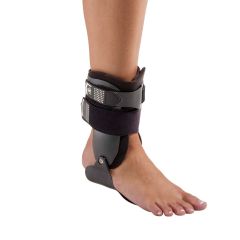
Designed for maximum lateral support, rigid uprights and stirrup shell control side-to-side ankle motion with a structured support system. Dual compression straps and an anatomical footplate work together to hold position and maintain targeted pressure. Delivers secure, locked-in stability for sport and athletic activities.
Recommended for:
- Medial/Lateral Ligament Protection
- Ankle Sprains
- Ankle Roll
- Ankle Instability
-
 Special Price $38.99 Regular Price $42.99(4) ReviewsStep up your game with the DonJoy Anaform Lace-Up Ankle Brace — pro-level support without the bulk. Engineered for comfort, built for performance, trusted for recovery. Prevent injuries. Recover faster. Move with confidence.
The Anaform Lace-Up Ankle Brace can be used to treat or prevent the following ankle injuries:
- Mild Sprains
- Strains & Instabilities
- Re-Enjury Prevention
-
 Special Price $47.99 Regular Price $52.99(3) Reviews
Speed-wrap lacing with figure-8 straps create a secure, taping-like ankle stabilization system with adjustable moderate support and compression control. Designed for quick application, it locks in the heel while supporting confident and safe movement during sport.
Recommended for:
- Medial/Lateral Ligament Protection
- Ankle Sprains
- Ankle Instability
-
 Special Price $86.99 Regular Price $95.99(11) Reviews
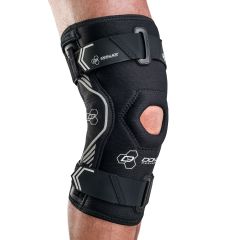
Moderate support with polycentric hinges for ligament stability and a natural gait. Mesh popliteal and open patella design with donut enhance comfort and targeted kneecap support. Moisture-wicking Drytex material and adjustable straps provide an ideal customized and comfortable fit. Ideal for athletes and active adults.
Recommended for:
- Mild to Moderate MCL/LCL Injuries
- Meniscus Injuries
- Knee Instability
- Sprains and Strains
- Hyperextension
- Arthritis
-
 Special Price $48.99 Regular Price $53.99(3) ReviewsStabilize Your Stride Dual-pull straps and removable buttresses deliver customizable patellar support for peak performance. Lightweight 4-way stretch knit ensures comfort and flexibility during every workout.
The Dual-Pull Patella Stabilizer Knee Sleeve can be used to treat or prevent the following knee injuries:
- Runner's Knee
- Patellofemoral Syndrome (PFPS)
- Patella Maltracking
-
 Special Price $97.99 Regular Price $107.99(4) Reviews
Dual polycentric hinges and adjustable X-straps mechanically control side-to-side ligament stress and limit hyperextension. Perforated neoprene with hex silicone banding holds the joint aligned and regulated throughout movement. Low-profile fit sits securely under a jersey or sleeve for contact and repetitive-motion sports.
Recommended for:
- Protection from Medial/Lateral Forces
- Joint Instability
- Mild to Moderate Sprains and Strains
- Hyperextension
-
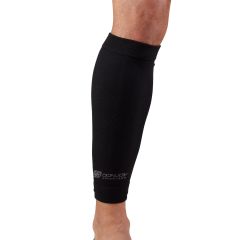 Special Price $17.99 Regular Price $19.99(1) ReviewBoost leg endurance with DonJoy® Advantage Performance Knit Compression Calf Sleeves — engineered for superior support and circulation. Ideal for runners, athletes, and recovery, they reduce fatigue and speed muscle recovery. Stay energized and perform at your peak Learn More
 -
 Special Price $69.99 Regular Price $77.99(1) Review
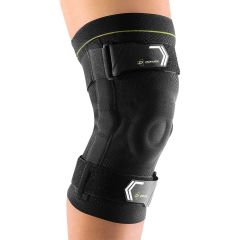
Moderate support with closed silicone buttress and removable hinges for patella support and stability. 4-way stretch knit fabric and dual adjustable straps ensure ideal fit. Customizable compression helps manage swelling and supports improved circulation. Ideal for athletes and active adults.
Recommended for:
- Overuse Injuries
- Mild Sprains
- Mild Strains
- Inflammation/Swelling


